Showing posts with label Catalonia / Cataluña. Show all posts

Skiing in Baqueira Beret (The Pyrenees, Lleida)

 The ski resort of Baqueira Beret is one of the best known in Spain due to the high quality of its snow and the great extension of its ski slopes. It has the advantage that, due to its location, it often has snow in winter, or almost always, and therefore the slopes are open, which is not easy. 

Baqueira is located in the eastern part of The Pyrenees, in the province of Lerida/Lleida (Catalonia), very close to Aragon, Andorra and France. 

Baqueira Beret has more than 160 kilometres of pistes of all levels of difficulty and is especially recommended for medium-high level skiing enthusiasts. In comparison, other major ski resorts in Spain are, for example, Formigal in Huesca (Aragon) with more than 140 km, or Cerler (Aragon) with 80 km, or Sierra Nevada in Granada (Andalusia) with 110 km. 


Places to stay, ski passes and other activities

Baqueira can be reached by car without difficulty on the N230 road, which passes close to the border between Aragon and Catalonia. To sleep in, you can book accommodation in hotels, hostels, appartments, etc. There are places both almost at the foot of the slopes and in the nearby villages. Near Baqueira are the towns of Tredós, Arties, Betrén, Vielha (Viella), the latter, highly recommendable to visit as a tourist in a free moment.

The ski passes can be bought at the bottom of the slopes, near the car park, as in any other resort.

In addition, other activities you can do in the mountains, apart from skiing, are excursions on foot or with snowshoes, snowmobile routes, sledging, etc. 


Ski piste map


Other ski resorts in the Pyrenees

Other Catalan ski resorts are La Molina, Masella, Boí Taül or Port del Compte.

Other ski resorts you can visit in the Pyrenees are the resorts in Aragon. These include Formigal and Cerler. On the other hand, Panticosa (40km of pistes) is a smaller resort, ideal for beginners or occasional skiers (and which has a connection with Formigal). Other resorts in Aragón are Astún, Candanchú and Valdelinares. On the other hand, in the south of Aragon (Teruel) is Javalambre - Valdelinares.

In the Pyrenees you can also find other ski resorts, for example in France or Andorra. 

In the south of the country, another resort that stands out is Sierra Nevada, in Granada.  Near Madrid, meanwhile, is La Pinilla (15km), which is small but suitable if you live in central Spain and want to ski for a day without travelling far. Others are Valdesquí and Sierra de Bejar.

Visiting Playa de Aro (Platja d’Aro), Costa Brava, Catalonia

Playa de Aro (or Platja d’Aro) is a town with a population of about 20.000 inhabitants in winter and over 100.000 in summer, which is located in the province of Girona (Gerona) in the Catalonia region (Cataluña) in the Costa Brava, Mediterranean Sea. It is a tourist destination with beautiful beaches and quiet coves of fine golden sand, clear blue water, breathtaking landscapes and natural surroundings to take a peaceful stroll for lovers of the outdoor activities, golf, watersports, leisure and children activities to 100 km away from Barcelona City.


What to visit in Playa de Aro

Castell d’Aro (Benedormiens Castle) is an interesting castle which dates from 1041 and currently is an art galery and exhibition, one place especially worth visiting for those who are interested in art and Santa María Church’s are in the history center town. Cavall Bernat is a way through the mountains which lets us to find beautiful coves, it is recommended to those who are in search of a different holiday and the opportunity to enjoy some beautiful sceneries. The Poeta Sitja Park is situated in the old town. Aquadiver, a watersport park. The spertacular promenade is the main meeting point of the town, it is in a parallel diretion to Large Beach, in which people can find a great number of bars, cafés, restaurants, hotels and shops and so on, people should spend at least one hour of their free time to stroll by this nice promenade in the evenings to enjoy its outstanding views.

Obviously Playa de Aro is also known for other things apart from its delicious cuisine, excellent wines and traditional gastronomic events, so many tourists will definitely be going back in the next years.


More touristic places to visit in Catalonia / Cataluña

Sitges: Sitges is situated on the Mediterranean Sea coast in the province of Barcelona (Catalonia) in the east of Spain just to 40 km away from Barcelona city.

– Castelldefels: Castelldefels is located on the Mediterranean Sea coast of Catalonia,  just to 18 km away from Barcelona city.

– La Pineda: With only 3,000 inhabitants, La Pineda (Vila-Seca) is a small town located in the north-east of the Iberian Peninsula, at Tarragona Province.

– Salou: Salou is a reference for the holydays of Spring and Summer in Spain.

Visiting Sitges, Barcelona (Gold Coast)

The town of Sitges is situated on the Mediterranean Sea coast in the province of Barcelona (Catalonia / Cataluña) in the east of Spain just to 40 km away from Barcelona city. With a population of about 30.000 inhabitants, its exceptional warm climate during all the year round due to its favorable geographical location and its 4 km of beautiful sandy beaches make Sitges an ideal holiday destination in Spain. Moreover, Sitges also has a lot to offer in the way of culture, gastronomy, sport, water sport activities, festivals, cultural events for people who like enjoying its excellent cuisine, lively atmosphere, activities for children, leisure and outdoor activities. In fact, Sitges attracts a lot of visitors every year from all over the world and never loses its own unique charm.


Sitges is also known for its Sitges International Fantastic Film Festival of Catalonia, the Barcelona-Sitges Vintage Car Rallys and its Carnival Celebration amongst others as well as its museums and its old neighborhood are also worth visiting. The “Arroz a la Sitgetana” (Sitges style rice) and Malvasía (wine) are the best products known in Sitges.

Nowadays, hotels, restaurants, cafes, terraces, clubs, pubs, bars, shops have managed to keep their traditional styles and makes Sitges goes on being a tourist destination of the highest quality in Spain where in a modern town as Sitges, which has a vivid nightlife, local people and visitors are usually open-minded. One thing is certain, nobody will never get bored in this town.


Other touristic places to visit in Cataluña

Barcelona city:  La Barceloneta, Ramblas Avenue, La Sagrada Familia…

– Castelldefels: Castelldefels is located on the Mediterranean Sea coast of Catalonia,  just to 18 km away from Barcelona city.

– La Pineda: With only 3,000 inhabitants, La Pineda (Vila-Seca) is a small town located in the north-east of the Iberian Peninsula, at Tarragona Province.

– Salou: Salou is a reference for the holydays of Spring and Summer in Spain.

What to visit in Castelldefels, Barcelona (Gold Coast)

Castelldefels is located on the Mediterranean Sea coast in the province of Barcelona (Cataluña / Catalonia Region) in the east of Spain just to 18 km away from Barcelona city. With a population of about 65 000 inhabitants, Castelldefels is really a famous tourist destination in Spain for people who like enjoying its excellent cuisine, fast service and a quiet atmosphere make it a popular place for business lunches, as well as leisure activities and its 5 km of beaches of fine and golden sand is an attraction for lovers the outdoor activities, surf, windsurf… In fact, it is a favorite destination for families with children and business relations.


On a hill is the Castelldefels Castle which was built before the 16th century on Roman and Iberian remains. Nowadays the castle is equipped for events and meetings with a capacity of more than 350 people. Hotels, restaurants, cafes, terraces, clubs, pubs, bars, shops and its healthy lifestyle and its warm climate make Castelldefels goes on being a tourist destination of the highest quality.


More places to visit in Barcelona and Catalonia (Cataluña)

– La Pineda: With only 3,000 inhabitants, La Pineda (Vila-Seca) is a small town located in the north-east of the Iberian Peninsula, at Tarragona Province.

– Salou: Salou is a reference for the holydays of Spring and Summer in Spain.

– Ramblas Avenue (Barcelona city): La Rambla goes from Catalonia Square to the seaport, and it has a lot of cafes, terraces, pubs and discotheques. In the end of the street, there is the Cristobal Colon monument.

– Columbus Monument: One of the most famous statues of Barcelona city. It was built in 1888 for a Universal Exposition and it represents a statue of Christopher Columbus above a pillar, pointing with his right hand to the sea.

– La Sagrada Familia: It is a must for tourists that arrive in Barcelona see its outstanding architecture, design and sculptures.

– La Barceloneta: In summer, you can sunbathe or swim in the beach of La Barceloneta, which is 5 minutes walking from Columbus Monument.

Barcelona: What to visit in Barcelona city (Catalonia). Three-days tour

Barcelona is considered as one of the most vanguard and touristic cities in Spain (more than Madrid). But… why? Firstly, its location in the Mediterranean coast provides to the city a warm weather and a lot of beaches in the city and its surroundings. Also, it has many remarkable monuments as The Güell Park, The Holy Family Church, The Gothic Neighborhood, The Catalonian Music Palace and many more.


The city has also been the headquarters of many important events as The 1992 Olimpic Games. Finally, maybe the best aspect of the city is its people: By visiting Barcelona you will discover a young multicultural atmosphere with a lot of activities and nigthlife in its beaches and streets, as in La Rambla avenue.

The city is placed in the north-east of the Iberian Peninsula, in the Catalonian region (Cataluña), Barcelona is a metropolis with around 1,500,000 habitants in the city and two million more in its surroundings. The official languages are the Catalonian and the Spanish, but most of people speak English pretty well.

Here we propose you a three-days tour to visit the most emblematic sites of Barcelona. Enjoy it!


Day 1: The Old City: La Ramblas, The Gothic Neighborhood, Colon Statue, La Barceloneta and the beaches

 – Las Ramblas Avenue: This is the most famous and visited avenue of the city where. There, people go to visit monuments, go shopping, rest and see the seaport. Las Ramblas street goes from Catalonia Square to Columbus Monument. To arrive at Las Ramblas by metro you can use the Line 3 (Liceu)  or  Lines 3, 6 and 7 to Catalunya Square.

– The Gothic Neighborhood: The Gothic neighborhood is alongside La Rambla street. It is one of the essential places that every visitor should see. In there, you will enjoy the traditional streets, monuments, churches…

– The Barcelona Cathedral: The Barcelona main cathedral is located in la Seu Square (Gothic neighborhood). It was built between XIII and XV centuries.

– San Jaume Square: In this square you will find the City Council and San Jaime Church.

– La boqueria market: This food market is placed in one side of Las Ramblas avenue. It’s a very popular place to eat something.

– Waxworks: Also located close to Las Ramblas (Banca Street , 7), the wax museum (Museo de cera) is one of the most visited museums of this type in Spain.

– Maritime Museum: It is located in Drassanes Avenue. This museum has a lot of staff about boats, galleys, etc. It can be interesting if you want to know more of the history of the navigation.

– Columbus Monument: This famous Columbus statue (Estatua de Colón) is in the Plaza de la Paz (between Las Ramblas and he seaport). Columbus monument measures 60 metres in height, and it is made of iron and bronze.

– La Barceloneta Neighborhood: La Barceloneta is a marine neighborhood which occupies the area around the beach. This historic neighborhood was designed and built in the XVIII century, taking the ground from the sea. Also, la Barceloneta is one of the most visited beaches of the city.

– The beaches: The coast of Barcelona has the following beaches: Barceloneta, Somorrostro, Nova Icaria, Bagatell, Mar Bella, LLevant, Marina, Forum, Sant Miquel and Sant Sebastiá.


Nigthlife in Barcelona: During evening and night, Las Ramblas zone also has a lot of activity in its bars, restaurants and pubs. In summer, there is nightlife there almost everyday.


Day 2: The Holy Family, The Güell Park and other remarkable monuments

In the second day of our trip we are going to discover the main monuments of Barcelona. Here you have a list with them, please feel free to visit the sites in the order you prefer:

 – The Church of the Holy Family: The Holy Family (La Sagrada Familia) is one of the most beautiful buildings the city. Its construction began in 1882 and it’s not finished yet. Antoni Gaudí Architect designed and directed the building from 1883 until his death in 1926. In fact, The Sagrada Familia is the masterwork of Antonio Gaudí, who was buried in the crypt of this church. The Holy Family was declared World Heritage Site by UNESCO in 2005.

– The Güell Park: The Güell Park (Parque Güell) was also designed by Antoni Gaudí, being constructed between 1900 and 1914. People who visit the park can enjoy strolling in its area, sitting down on its decorated benches or admiring its architecture. If visitors touch its sculptures, they will realize the experience of feeling the shapes and the colorful of its artwork, such as the dragon, the 86 columns, the benches, the stairway, so on. The park was included as World Heritage Site in 1984.

 – Casa Milà: Popularly known as La Pedrera, Casa Mila is a unique modernist building located at Paseo de Gracia. The building was designed by architect Antoni Gaudí and built between 1906 and 1912. In 1984, Casa Mila was declared a World Heritage by UNESCO. To read the whole history of this bulging.

– The Catalonian Music Palace: Palau de la Música Catalana, known as Palau,  is an impressive hall concert, located in the center city. This building is one of the most visited places in Barcelona by people who want to enjoy its Modernism architecture or listen to its concerts. It is located near the Gothic Cathedral, and to 10 minutes on foot from Catalonia Square. The Catalonian Musica Palace was was declared World Heritage Site in 1997.

– Other monuments declared World Heritage by UNESCO : You also can visit in Barcelona city the following places: Casa Batlló, Casa Vicens,  Santa Cruz and San Pablo Hospital.


Day 3: Montjuic, Tibidabo, Agbar Tower, Camp Nou…

In the third day we will see other touristic places of the city not as famous as the previous ones, but with have a difference among citizens and visitors:

– Montjuic and Tibidabo zones: From these view points people can enjoy the view of Barcelona.

–  The Magic Montjuic Fountain: One of the  most  beautiful fountains in the world  is  the  Magic Montjuic Fountain (Fuente mágina de Montjuic) which offers an outstanding performance of colorful  light, music and water. It was built in  1929  for Universal Exhibition of Barcelona, and was designed by the Catalonian engineer Carlos Buigas (1898- 1979). The Magic Fountain is located  at the Queen Maria Cristina Avenue in front of the  Montjuict Palace. It is worth a visit.

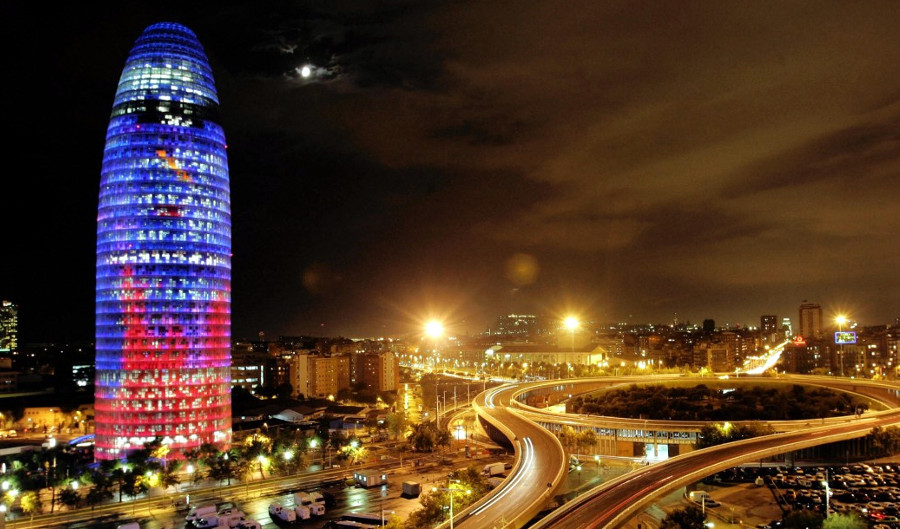
– Agbar Tower: Torre Agbar measures 145 metres in height, the third higher building of Barcelona. It is located at Diagonal Avenue. Although it was built recently, its colorful surface , its shape and its visibility from many points of the city have favored its fame among the people as a new icon of the city.

– Camp Nou: This is a must for all the FC Barcelona football team supporters. This football stadium has a museum inside it and it’s located near Zona Universitaria (Metro Line 3) and Pedralbes Park (Palau Real Metro station).

Please, if you notice any other important place of Barcelona missing, add it in the comments section.


More places to visit near Barcelona

– Salou: Salou is one of the summer-touristic-towns places in the Mediterranean coast.

– Sitges: Sitges is also known for its Sitges International Fantastic Film Festival of Catalonia, the Barcelona-Sitges Vintage Car Rallys and its Carnival Celebration.

– Castelldefels: Castelldefels is located on the Mediterranean Sea coast of Catalonia,  just to 18 km away from Barcelona city.

– La Pineda: With only 3,000 inhabitants, La Pineda (Vila-Seca) is a small town located in the north-east of the Iberian Peninsula, at Tarragona Province.

– Valencia: Bordering the meditterranean coast from Barcelona to the south of the country, you will find this city. In Valencia you can visit places as La Ciudad de las Artes y las Ciencias or La Lonja.

– Zaragoza: Zaragoza is a big city located among Barcelona and Madrid. The perfect place to rest one or two days while visiting the city.

– Madrid: The capital city of Spain. Don’t miss it!

The Catalonian Music Palace / Palau de la Música Catalana (Barcelona)

The Palau de la Música Catalana (The Catalonian Music Palace, or The Palace of Catalan Music), known as the Palau,  is a hall concert, located in Barcelona city. This building is one of the most visited places in Barcelona by people who want to enjoy its Modernism architecture or listen to the choir of the Orfeó Catalá (Catalonian Choral Society) or concerts.

Located in the heart of Barcelona city near the Gothic Cathedral, and to 10 minutes on foot from the popular Catalonia square (plaza de Cataluña), this modernist building was declared a World Heritage site in 1997 by UNESCO.


History of the The Catalonian Music Palace

The Palau de la Música Catalana was constructed between 1905 and 1909 by the Catalonian Modernist architect Lluís Domenech i Montaner (1850-1923), who made an agreement with the best artists, sculptors and painters such as the architect Jeroni Granell i Manresa (1867-1931) who made many of the colorful stained glass windows and dome of the palace; the world renowned Aragonese sculptor Pablo Gargallo (Maella -Zaragoza 1881- 1934) who sculpted the colossal figures of the proscenium; Lluís Bru i Salelles ( 1868-1952) and Mario Maragliano who worked in the fine mosaics, among other artists, so that all of them worked on the project of a building for the Catalonian Orfeó Headquarter (sede del Orfeó Catalá).

Having a seating capacity of more than 2.000, the Palau has a main outstanding Concert Hall (Sala de Conciertos) with a large organ over its stage; the Rehearsal Hall of the Orfeó Catalá which is below the main Concert Hall; the stunning Hall Lluís Millet among other things.

Nowadays, the Palau de la Música Catalá has a lot of performances during the year, so that all people can see the impressive Palau which is considered to be a Catalan Modernism masterpiece. However, if people do not have free time to attend any concert, they can take a guided visit in the morning, or perhaps take a stroll around its streets and seeing its wonderful facades (at number 7 San Pere Mes Alt street and 4 Amadeu Vives street). Moreover, there are a restaurant and cafés inside the Palau building.


Visiting the building

The Palau building is placed at 4 Palau de la Música street. You can go there by bus, lines 17, 19 and 45.

The ticket to visit the Palau can cost from 9 to 18 euros. The guided tour lasts one hour. There is a guided tour every 30 minutes from 10 a.m. to 3 p.m.

Being Barcelona the second largest city in Spain (the first is Madrid) has a lot of interesting places, buildings, activities, entertainments to offer visitors in the way of spending an unforgettable holiday. However, if people attend some of the concerts at the Palau, they will have an enjoyable experience. Do not leave Barcelona without visiting the Palau.


More places to visit in Barcelona city

– Las Ramblas Avenue: La Rambla Avenue goes from Catalonia Square to the seaport, and it has a lot of cafes, terraces, pubs and discotheques. In the end of the street, there is the Cristobal Colon monument.

– Columbus Monument: One of the most famous statues of Barcelona city. It was built in 1888 for a Universal Exposition and it represents a statue of Christopher Columbus above a pillar, pointing with his right hand to the sea.

– The Holy Family (La Sagrada Familia): It is a must for tourists that arrive in Barcelona see its outstanding architecture, design and sculptures.

– La Barceloneta: In summer, you can sunbathe or swim in the beach of La Barceloneta, which is 5 minutes walking from Columbus Monument.

Read also our post with the most famous monuments in Spain.

La Pineda: A seaside town in Catalonia with beaches, sun and lots of fun (Gold Coast)

With only 3,000 inhabitants, La Pineda (Vila-Seca) is a small town located in the north-east of the Iberian Peninsula, at Tarragona Province (Catalonia / Cataluña). However, it has to offer some peculiarities which become La Pineda a great place to go on holidays:  Its wide beaches, its attractions parks and its night life will amuse all people, from families, young people, older people and everyone else.

Also, La Pineda is only 1km away from Salou, which means that people can go from La Pineda to Salou by foot in only 30minutes aprox., or you also can go by public bus.


The Gold Coast

La Pineda is located in the Gold Coast (Costa Dorada). This coast is famous for its beaches and its golden and soft sand, its warm average temperature both in summer and in winter, and its clear sea-water.

The promenade of La Pineda measures more than 2 kilometres in length (one of the longest of Catalonia), so there is enough space to rest in the beach, take sunbathes and swim without crowds.


What to do La Pineda: Attractions parks, Water Parks, Golf Courses and more

La Pineda VilaSeca has some great installations in its surroundings to practice any king of activities: water-parks, attractions, golf courses…


Here are some of them:

– Aquopolis (Water Park): Located in the center of the town, by visiting Aquopolis you will enjoy a huge variety of water attractions and swimming pools. Aquopolis is the perfect place to stay in a hot summer day enjoying their aquatic attractions and their giant swimming pools.

– Port Aventura (Attractions Park): The older and most famous amusement park in Spain. In there you will enjoy many impressive attractions as Dragon Khan roller coaster and a lot of live spectacles. It also has an independent water park. You can go to Port Aventura by car or by bus from La Pineda and from Salou.

– Golf Courses:  If you enjoy practicing golf, you can find some Golf Courses near La Pineda, as Lumine Golf.


Nightlife in La Pineda

Pacha La Pineda is the main discotheque of the zone. It was founded in 1985 and nowadays is considered as an icon in the Golden Coast. During all the summer lots of people come there every night to Pacha to enjoy its thematic parties and DJ’s.

Besides, La Pineda has many more places to visit during the night, as the terraces or pubs located in the town.  Also, if you want more fun you can take a bus to Salou, which is always overcrowded of young people.


More places to visit on holidays

– Salou: Salou is a reference for the holydays of Spring and Summer in Spain. Furthermore, the profile of the people who visit the town is highly various: Since families with children, couples, and young people.

– Barcelona: Read here the best places to visit in the main city of Catalonia.

– Castelldefels: Castelldefels is located on the Mediterranean Sea coast of Catalonia,  just to 18 km away from Barcelona city.

– Sitges: Sitges is also known for its Sitges International Fantastic Film Festival of Catalonia, the Barcelona-Sitges Vintage Car Rallys and its Carnival Celebration.

Agbar Tower of Barcelona / Torre Agbar (Barcelona)

Agbar Tower (Torre Agbar) is an omnipresent skyscraper located in Barcelona city. Although it was built recently, its colorful surface (above all at night), its unique shape and its visibility from many points of the city have favored its fame among citizens and visitors.
 

The skyscraper was designed by Jean Nouvel architect and was inaugurated in 2005. Jean Nouvel said that the design of the building was inspirited in Antoni Gaudi’ style, very popular in Barcelona.

Agbar Tower has more than 30 levels and measures 145 metres in height, which means being the third higher building of the city. The skyscraper is placed at Diagonal Avenue number 211, in front of Catalan Glories Square (Plaza de las Glorias Catalanas).

To arrive at Agbar Tower you can go by metro Line 1 to Glories Metro Station. You can also go by tram, taking the Line T5 to La Farinera station or Line T4 to Ca l’Aranyó tram station.


Visiting Agbar Tower (Torre Agbar) in Barcelona

Agbar Tower has more than 50000 square metres of rooms. Inside the tower there is space for offices, an auditorium room and a luxury hotel.

Nowadays, Agbar Tower is considered as one of the main icons of Barcelona. It is recommended to visiting it at night, when the crystal-surface of the skyscraper is illuminated by a vast variety of colors, creating amazing dynamic images and animations.


Other popular places to visit in Barcelona

– Church of the Holy Family (La Sagrada Familia): It is a must for tourists that arrive in the Condal City see its outstanding architecture, design and sculptures.

– Las Ramblas Avenue: Las Ramblas goes from Catalonia Square to the seaport, and it has a lot of cafes, terraces, pubs and discotheques. In the end of the street, there is the Cristobal Colon statue, one of the icons of Barcelona.

– Columbus Monument (Monumento a Colón): One of the most famous statues of Barcelona city. It was built in 1888 for a Universal Exposition and it represents a statue of Christopher Columbus (Cristobal Colon) above a pillar, pointing with his right hand to the sea.

– La Barceloneta beach: In summer, you can sunbathe or swim in the beach of La Barceloneta, which is 5 minutes walking from Las Ramblas – Columbus Statue.

– Casa Mila: Popularly known as La Pedrera, Casa Mila is a unique modernist building located at Paseo de Gracia. The building was designed by architect Antoni Gaudí and built between 1906 and 1912.

– The Güell Park: People who visit the beautiful Güell Park can enjoy strolling in its area, sitting down on its decorated benches or admiring its fantastic architecture and the perfection the artwork.

Casa Mila - La Pedrera: A Gaudí designed building in Paseo de Gracia (Barcelona)

Casa Mila (popularly known as La Pedrera) is a unique modernist building located at Paseo de Gracia (Passeig de Gràcia) number 92, Barcelona.

The building was designed by architect Antoni Gaudí and built between 1906 and 1912. Then, in 1984, Casa Mila was declared a World Heritage (UNESCO).


The Mila Family

When in the second part of the nineteenth century El Ensanche disctrict was built in Barcelona, Paseo de Gracia avenue became one of the main streets of the city. Many bourgeois families wanted to live in this area. One of them was the Mila Family that ordered Gaudí to design Casa Mila, whose first floor had to be a place to live , and the rest of them flats to rent to other families.

During its construction and some years later, the building was involved in some controversy. On one hand, its curved and unprecedented design generated discrepancies among the popular opinion about it appearance. On the other hand, also in the construction there were some administrative problems, which were finally solved.


The design of the building

Casa Mila is a modernist building, which has 1835 m2, six levels and two courtyards. Its singular facade and balconies are famous for its curvilinear shape, never seen before in that age.

It is said that Gaudi was a highly chaotic, observant and religious person, so its designs reflect his desires of perfection and a fusion with the nature world.
Nowadays, Casa Mila is one of the most visited monuments in Barcelona. Furthermore, it has been declared a World Heritage Site.


Visiting Casa Mila – La Pedrera

La Pedrera is open to visitors almost every day from 9.00 to 18.00 in winter and from 9.00 to 20.00 in summer. To buy the tickets can cost between 10 and 16€.

To arrive at Casa Mila, take the Metro Lines 3 or 5 (Diagonal metro station).


More monuments designed by Antoni Gaudí

– Church of the Holy Family (La Sagrada Familia): It is a must for tourists that arrive in the Condal City see its outstanding architecture, design and sculptures.

– The Güell Park: People who visit the beautiful Güell Park can enjoy strolling in its area, sitting down on its decorated benches or admiring its fantastic architecture and the perfection the artwork.


More popular places to visit in Barcelona

– Las Ramblas Avenue: Las Ramblas goes from Catalonia Square to the seaport, and it has a lot of cafes, terraces, pubs and discotheques. In the end of the street, there is the Cristobal Colon statue, one of the icons of Barcelona.

– Columbus Monument (Monumento a Colón): One of the most famous statues of Barcelona city. It was built in 1888 for a Universal Exposition and it represents a statue of Christopher Columbus (Cristobal Colon) above a pillar, pointing with his right hand to the sea.

– La Barceloneta beach: In summer, you can sunbathe or swim in the beach of La Barceloneta, which is 5 minutes walking from Las Ramblas – Columbus Statue.

La Barceloneta: A beach in the touristic centre of Barcelona

La Barceloneta beach (Playa de la Barceloneta) is probably the most popular beach of Barcelona. It is placed in the city touristic centre, at 5 minutes on foot from La Rambla and Columbus Monument.

Also, La Barceloneta is the name of the marine neighborhood which occupies the area around the beach. This historic neighborhood was designed and built in the XVIII century, taking the ground from the sea.

To arrive at La Barceloneta, you can take the metro (Line 4) until Barceloneta Metro Station or Ciutadella – Vila Olímpica Metro Station.


What to visit in La Barceloneta

– The beach (Playa de la Barceloneta): As Barcelona has a warm climate; its beaches have many people during all the year (except maybe in winter).

Frequently, most of the people who go there to have a bath, swim and sunbathe are tourists. That is because the citizens of Barcelona prefer to go to other places where there are fewer people. However, we highly recommend to visit La Barceloneta beach and its surroundings, surely you will enjoy it.

– Ronda Litoral and the seafront: This avenue starts in Barceloneta Metro Station, near the old port and Marina, and goes along the beaches which are in this part of the city.

– Marina / Port Vell: A nice place to see the sea and the ships. Also in there you will find some restaurants and cafes.

– The olimpic port of Barcelona: The olimpic port is placed between La Barceloneta and “Nova Icaría” beach.


More popular places to see near La Barceloneta

– Columbus Monument (Monumento a Colón): One of the most famous statues of Barcelona city. It was built in 1888 for a Universal Exposition and it represents a statue of Christopher Columbus (Cristobal Colon) above a pillar, pointing with his right hand to the sea.

– Las Ramblas Avenue: Las Ramblas goes from Catalonia Square to the seaport, and it has a lot of cafes, terraces, pubs and discotheques. In the end of the street, there is the Cristobal Colon statue, one of the icons of Barcelona.

– Maremagnum: This commercial center is located between Colón Monument and La Barceloneta (Moll d’Espanya del Port Vell), just above the sea. In there, you will find shops, terraces, discotheques and a lot of hobby activities.

– The Aquarium of Barcelona (l’Aquarium): The aquarium is in the same location than Maremagnum Comercial Center. They have almost 4 millions tons of water in their pools, where you will be able to see the best of the Mediterranean Sea.


Other buildings and monuments in Barcelona

The Güell Park: People who visit the beautiful Güell Park can enjoy strolling in its area, sitting down on its decorated benches or admiring its fantastic architecture and the perfection the artwork.

– Church of the Holy Family (La Sagrada Familia): It is a must for tourists that arrive in the Condal City see its outstanding architecture, design and sculptures.


More places nearby:

– Sitges: Sitges is also known for its Sitges International Fantastic Film Festival of Catalonia, the Barcelona-Sitges Vintage Car Rallys and its Carnival Celebration.

– Castelldefels: Castelldefels is located on the Mediterranean Sea coast of Catalonia,  just to 18 km away from Barcelona city.

– La Pineda: With only 3,000 inhabitants, La Pineda (Vila-Seca) is a small town located in the north-east of the Iberian Peninsula, at Tarragona Province.

– Salou: Salou is a reference for the holydays of Spring and Summer in Spain.

If you want to visit the whole county, read also our post about the best cities and monuments in Spain.

Columbus Monument in Barcelona / Estatua de Colón de Barcelona

Columbus Monument (Monumento a Colón) is one of the most famous statues of Barcelona city. It was built in 1888 for a Universal Exposition and it represents a statue of Christopher Columbus (Cristobal Colon) above a pillar, pointing with his right hand to the sea (metaphorically, pointing to America, although actually the statue is pointing to Italy).

Columbus statue is placed in the “Peace Square” (Plaza de la Paz in Spanish or Plaça de la Pau in Catalan), which is between La Rambla Street and the port, at the cross of Colon Avenue. The monument measures 60 metres in height, and it is made of iron and bronze.

This area of the city is one of the most popular among the citizens and tourists who visit Barcelona: That is because, staying at Colon, on one direction you will find the Port and the beach, and in other direction there is Las Ramblas Street, where you can visit some important museums, the Gothic neighborhood, La Boquería Market, Catalonia Square, Barcelona Cathedral and many more places. Also, it’s a good place to have a lunch and at night there are many bars and pubs for young people in the area.

To arrive at Columbus Monument, you can go by metro (Line 3, Drassanes Metro Station).


Other relenant places near Columbus Monument in Barcelona

– Las Ramblas: “La Rambla” is a famous street in the centre of  Barcelona where citizens and visitors can walk, visit monuments, eat and rest in the terraces, see the port of Barcelona, go shopping or go to pubs during the night. Generally, the whole area around this street is full of people, not only during the day, but also in the night.

– Maremagnum: This commercial center is located beyond Columbus Monument, just above the sea. In there, you will find shops, terraces, discotheques and a lot of hobby activities.

– La Barceloneta beach: In summer, you can sunbathe or swim in the beach of La Barceloneta, which is 5 minutes walking from Las Ramblas – Columbus Statue.

Salou: Sun and beach for families, and a lot of party for young people (Gold Coast)

One century ago, Salou was a small village placed in Tarragona (Catalonia / Cataluña). Nowadays, it has 25.000 inhabitants, and a big part of its economy is based in the tourism: With thousands of apartments and hotels, hundreds of shops, restaurants, pubs and discotheques, and of course, a beautiful beach, Salou is the most touristic town in the Gold Coast (Costa Dorada).

Salou is a reference for the holydays of Spring and Summer in Spain. Furthermore, the profile of the people who visit the town is highly various: Since families with children, couples, and young people. As Salou is always plenty of people and activities, it’s impossible not to find some amusing thing to do each day.


What to do do in Salou

The main point of Salou is its beach: With its clean sand, and the warm and clear water is a perfect place to go for a swim in summer. Also, the sun and the weather is ideal for sunbathes and resting from May to September.

However, Salou gives you a lot of options apart of the beach: restaurants, amusement parks (Port Aventura, Aquopolis…), shops, discotheques, festivals, and many more.

Talking about sport activities, you can rent a boat in the beach, play volleyball, rent a motorcar in the circuit, go cycling and jogging at the surroundings of the town, practice golf, etc..

Attractions parks: Port Aventura and Aquopolis

Port Aventura is the older (and probably the bigger) amusement park in Spain. It is placed near Salou and in there you will enjoy impressive attractions as Dragon Khan roller coaster and a lot of live spectacles. You can go to Port Aventura by car or by bus.

Aquopolis is an water park placed in La Pineda, a town near Salou which is 30mins away on foot (but probably you would prefer to go by bus). Aquopolis is the perfect place to stay in a hot summer day enjoying their aquatic attractions and their giant swimming pools.


Activities for young people in Salou

Although not all the people who visit Salou are young, every year thousands of students and people between 18 and 30 years visit Salou. (Maybe that is because some families prefer to stay in a quieter place like Benidorm, La Pineda, or Andalusia). For them there is an spectacular offer of pubs and discotheques which are open every night from May/June to September, so if you want to go party every day, Salou is your best option.

Festivals: In several dates, Salou celebrates festivals and other celebrations (like in Holy Week or at San Juan). This celebrations are especially popular among young people, who come from other cities of Spain and from outside, as France, Germany or Great Britain.


Hotels and apartments in Salou

The most common habit for people who want to stay some days in Salou is to rent an apartment (for 1 week in most cases) or to sleep in a hotel. If you chose this option, chose an accommodation with air conditioner and swimming pool, you will enjoy it much more!

Another option is to go camping. There is a camping in the middle of the town.

Whatever you chose, remember to take a reservation one or two months before your holydays, it will be cheaper and you will avoid the option of running out of room!


Other interesting places to visit near Salou

– La Pineda: La Pineda is a small town located near Salou. In there you will find a beautiful beach, the Aquopolis and the popular discotheque Pacha La Pineda. You can go by bus from Salou.

– Barcelona: One of the most touristic cities in Europe. It is around 100km abroad of Salou.

– Castelldefels: Castelldefels is located on the Mediterranean Sea coast of Catalonia,  just to 18 km away from Barcelona city.

– Sitges: Sitges is also known for its Sitges International Fantastic Film Festival of Catalonia, the Barcelona-Sitges Vintage Car Rallys and its Carnival Celebration.

– Ibiza: This island is not near Salou, but… if you are young and you like Salou, surely you will have to try Ibiza.

Las Ramblas street (Barcelona): Monuments, museums squares and markets to visit in La Rambla de Barcelona

“La Rambla”, popularly known as “Las Ramblas” is a famous street in the centre of  Barcelona where citizens and visitors can walk, visit monuments, eat and rest in the terraces, see the port of Barcelona, go shopping or go to pubs during the night. Generally, the whole area around this street is full of people, not only during the day, but also in the night.

Las Ramblas goes from Catalonia Square to the seaport, and it has a lot of cafes, terraces, pubs and discotheques. In the end of the street, there is the Cristobal Colon statue, one of the icons of Barcelona.

You can go to Las Ramblas by metro using Line 3 to Liceu or to Catalunya (Line 3, 6 and 7).


What to visit in Las Ramblas

– Colon Statue (Columbus Monument): This monument is placed in the “Portal de la Pau” Square, between La Rambla and the port. It was built in 1888 for the Barcelona Universal Exposition, and nowadays is one of the most famous statues of the city. The statue represents to Cristobal Colon signing with his right arm to the sea (metaphorically, he is signing to the American continent).

– La boqueria (a traditional food market): In this market you can find a lot of delicacies. It’s a very popular place to eat something. You can visit its website on www.boqueria.info

– Maritime Museum: Placed in Drassanes Avenue and inaugurated in 1936, this museum has a lot of staff about boats, galleys, etc. It can be interesting if you want to know more of the history of the navigation.

– Waxworks (Museo de cera): Placed in Banca Street number 7, this wax museum is one of the most visited museums of this type in Spain.

– Gothic neighborhood: This neighborhood is alongside La Rambla street and is one of the essential places that every visitor should see. In there, you will enjoy the traditional streets, monuments, churches… and also you can find a lot of shops and bars.

– The Barcelona Cathedral: This cathedral is placed in “Plaza de la Seu”, in the Gothic neighborhood and was built between XIII and XV century.

– San Jaume Square: This ancient square has the City Council and the San Jaime Church.

– Raval neighborhood: This neighborhood is also near La Rambla and is very famous for its traditional culture. In there, you can find a lot of pubs and premises to have a lunch or drink something.


More places to see near Las Ramblas

– Maremagnum: This commercial center is located beyond Colón Monument, just above the sea. In there, you will find shops, terraces, discotheques and a lot of hobby activities.

– La Barceloneta beach: In summer, you can sunbathe or swim in the beach of La Barceloneta, which is 5 minutes walking from Las Ramblas – Columbus Statue.


Other buildings and monuments for tourists in Barcelona

The Güell Park: People who visit the beautiful Güell Park can enjoy strolling in its area, sitting down on its decorated benches or admiring its fantastic architecture and the perfection the artwork.

– Church of the Holy Family (La Sagrada Familia): It is a must for tourists that arrive in the Condal City see its outstanding architecture, design and sculptures.


More places nearby:

– Sitges: Sitges is also known for its Sitges International Fantastic Film Festival of Catalonia, the Barcelona-Sitges Vintage Car Rallys and its Carnival Celebration.

– Castelldefels: Castelldefels is located on the Mediterranean Sea coast of Catalonia,  just to 18 km away from Barcelona city.

– La Pineda: With only 3,000 inhabitants, La Pineda (Vila-Seca) is a small town located in the north-east of the Iberian Peninsula, at Tarragona Province.

– Salou: Salou is a reference for the holydays of Spring and Summer in Spain.


Church of the Holy Family of Barcelona / Basilica de la Sagrada Familia (Barcelona)

The Basilica and Expiatory Church of the Holy Family, known as “La Sagrada Familia”, is obviously one of the most beautiful building of Barcelona. Although its construction began in 1882, nobody really knows when it will be finished. It is said that in 2030, it will have been completed with 18 towers. ( one dedicated to Jesus, other to Mary, 12 to the apostles and 4 to the evangelists).

Nowadays, this wonderful church has more than enough artwork to be the landmark most visited of Barcelona, therefore it is a must for tourists that arrive in the Condal City see its outstanding architecture, design and sculptures. It is well worth a visit inside or outside.

One can have heard other visitors talk about the spectacular Sagrada Familia, but until oneself sees it, it is impossible to imagine its absolutely unique artwork. Visitors will be absolutely spellbound when they look up and see the wonderful colourway of its stained glass windows, its high columns and the amazing ceiling. Besides, taking the lift to the towers (about 55 metres height one and 75 metres height another), they can see a breathtaking view of Barcelona, and go down the unbelievable narrow spiral staircase.

In addition, this church had been begun its construction in 1882 by the architect Francisco de Paula del Villar Lozano (1828-1901) who quit the direction of the project in 1883. Anyway, Antoni Gaudí i Cornet (1852-1926) designed the current project and directed the building from 1883 until his death on the 10th June of 1926. In fact, The Sagrada Familia is the masterwork of Antonio Gaudí, who was buried in the crypt of this church. To add, UNESCO declared it a World Heritage Site.

Queues are very long, so tourists should book the ticket in advance to avoid the wait. It is in city centre. Better go on foot.


More monuments designed by Antoni Gaudí

– Casa Mila: Popularly known as La Pedrera, Casa Mila is a unique modernist building located at Paseo de Gracia. The building was designed by architect Antoni Gaudí and built between 1906 and 1912.

The Güell Park: People who visit the beautiful Güell Park can enjoy strolling in its area, sitting down on its decorated benches or admiring its fantastic architecture and the perfection the artwork.


More popular places to visit in Barcelona

– Las Ramblas Avenue: Las Ramblas goes from Catalonia Square to the seaport, and it has a lot of cafes, terraces, pubs and discotheques. In the end of the street, there is the Cristobal Colon statue, one of the icons of Barcelona.

– La Barceloneta beach: In summer, you can sunbathe or swim in the beach of La Barceloneta, which is 5 minutes walking from Las Ramblas – Columbus Statue.

– Columbus Monument (Monumento a Colón): One of the most famous statues of Barcelona city. It was built in 1888 for a Universal Exposition and it represents a statue of Christopher Columbus (Cristobal Colon) above a pillar, pointing with his right hand to the sea.

If you want to visit the whole county, read also our post about the best cities and monuments in Spain.

Parque Güell / The Güell Park (Barcelona)

The spellbinding Güell Park (Parque Güell) was designed, planned and built by the architect Antoni Gaudí Cornet (1852-1926), being constructed between 1900 and 1914. It is one of the most emblematic site of Barcelona. Its construction was ordered by the wealthy Eusebi Güell Bacigalupi, Earl of Güell (1852-1918), who died in his house of this park. The stunning park is located in a strategic place of  Barcelona – the Condal City, having a breathtaking views of Barcelona and its surroundings.

People who visit the beautiful Güell Park can enjoy strolling in its area, sitting down on its decorated benches or admiring its fantastic architecture and the perfection the artwork. Therefore, if visitors touch its scultures, they will realize the experience of feeling the shapes and the colorful of its artwork, such as the dragon, the 86 colums, the benches, the stairway, so on.

On the other hand, City Hall bought this park in 1922 to become a lively public park. Occupying more than 15 hectares the park has several buildings, a lot of plants and trees (palms, oaks, pines), by the way, the house in the park in which Gaudí lived from 1906 until 1925 is now a museum of furniture designed by Gaudí called Gaudí House Museum.

To sum up, The Güell Park is certainly worth a visit although it takes several hours to see the whole park. In fact, it is said that more than 3,000,000 people a year visit the park. To add, UNESCO declared the Güell Park a World Heritage Site in 1984.

Visitors should wear comfortable shoes. It is near city center. It takes 50 minutes on foot, 30 minutes by bus and 15 minutes in car or taxi to arrive at the park.


More monuments designed by Antoni Gaudí

– Church of the Holy Family (La Sagrada Familia): It is a must for tourists that arrive in the Condal City see its outstanding architecture, design and sculptures.

– Casa Mila: Popularly known as La Pedrera, Casa Mila is a unique modernist building located at Paseo de Gracia. The building was designed by architect Antoni Gaudí and built between 1906 and 1912.


More popular places to visit in Barcelona

– Las Ramblas Avenue: Las Ramblas goes from Catalonia Square to the seaport, and it has a lot of cafes, terraces, pubs and discotheques. In the end of the street, there is the Cristobal Colon statue, one of the icons of Barcelona.

– Columbus Monument (Monumento a Colón): One of the most famous statues of Barcelona city. It was built in 1888 for a Universal Exposition and it represents a statue of Christopher Columbus (Cristobal Colon) above a pillar, pointing with his right hand to the sea.

– La Barceloneta beach: In summer, you can sunbathe or swim in the beach of La Barceloneta, which is 5 minutes walking from Las Ramblas – Columbus Statue.

Search places

More places