Showing posts with label Beach. Show all posts

Visiting Muelle de Riotinto and Paseo de la Ria of Huelva

A must if you visit Huelva (Andalusia / Andalucía) is the Paseo de la Ría and the Muelle de la Compañía de Riotinto. This area of the city, a five-minute walk from the centre and facing the Ordiel River, has beautiful views and a calm and relaxing atmosphere.


Muelle of Riotinto

This is a three-height dock, with a metallic structure and wooden floor, which allows us to walk on top of it and takes us into the river, with views towards the sea.

In the past it was an ore loading bay for the Riotinto Company, and has now been restored for recreational use since 2007.


Paseo de la Ría of Huelva

Next to the Muelle de la Compañía de Riotinto is this promenade, next to the river (and very close to the sea) where you can walk and eat or drink something in the terraces of the cafés along the promenade. A good place to watch the sunset by the water.


Other places to visit in Huelva

- City centre: The city centre is a comfortable size to walk around in an afternoon. A 5-10 minute walk will take you to the Plaza de las Monjas, the Christopher Columbus Statue, the Plaza de la Constitución and the Town Hall, or Casa Colón, and a little further into the city, the Cathedral of La Merced de Huelva in the Plaza de la Merced.

- Beaches: There are several beaches close to Huelva, such as Punta Umbría, Playa del Espigón, Playa de Mazagón or Playa de la Bota.

- City of Seville: Seville is approximately one hour away by road or train.

Visiting Las Catedrales Beach (Galicia) / Playa de Las Catedrales

Playa de las Catedrales is possibly the most famous beach in northern Spain, on the Rias Altas Coast (Atlantic Ocean) due to its beautiful landscape of sea, nature, animals, plants and rocks, which make it ideal for discovering and photographing. 

The beach is located in Galicia, halfway between Ribadeo (to the east) and Viveiro, Cangas, Burela and Foz (to the west), and about 100 km north of the city of Lugo. In this article we will tell you the main things you should know if you want to visit Las Catedrales Beach:


What to see in Las Catedrales Beach and tips to prepare your visit

- Tides and waves: Before planning your visit, you should check the daily tide schedule (it changes every day) as the beach can only be visited when the tide is at its lowest. At high tide the beach disappears completely, while during the 30-60 minute period of time when the tide is at its lowest, you can walk along the entire coastline all the way to the nearby villages.

- Walking route: At low tide, you can walk from Las Catedrales beach to the nearby beaches (almost all of them can be reached very quickly on foot):  To the east is Carricelas Beach, Esteiro Beach, Playa das Covas, Seborro Beach, Dos Castros Beach (Os Castros), Marbadás Beach, Os Castros Viewpoint (Miradoiro da Praia dos Castros) and further on, Os Xuncos Beach, all equally beautiful. Along the way you can pass through various nooks and crannies and natural caves where you can enter and see beautiful scenery.

Depending on the tide, it may not be possible to reach Os Castros, as at many times the water may cover you above your waist, and the waves can be strong, so if the sea is not calm, you cannot go all the way. 

In addition, the sea level rises and falls very quickly, so it may be possible that you can go from Las Catedrales to Os Castros along the seashore, but you cannot return, and in that case, you will have to go back along a path that is further up, behind the cliffs.  In any case, it is well worth a visit. The visit can take between 1 and 3 hours.

- Reservations: To be able to access the beach, you must book your ticket well in advance (usually one or two weeks in advance) as they sell out very quickly. Reservations can be made through the Xunta de Galicia website. At the entrance there are guards who will check that only those who have booked a reservation can access the sand.

- How to get there: You can get there by public transport or by car. If you choose to go by car, there are free parking spaces in open spaces very close to the site, as well as bars where you can have a coffee or something to eat. It is advisable, if you go by car, to arrive and park a while before the time of low tide, in order to be at the site in good time and to avoid the car park getting full.


- Swimming in the sea: You can go to the beach to swim in the sea, although this is not the most common thing to do. Most visitors go for a walk along the coast to discover the landscape and take photos, so bathing is not their priority (nor is sunbathing... in any case, besides, the sand will be wet). However, to get to Os Castros you will have to get wet more than once (and know how to swim) as the waves reach the rocks in several places along the route.

- Other nearby beaches and landscapes: Although Las Catedrales Beach is probably the most famous and photographed beach in Galicia, the truth is that in Galicia, as well as in Asturias, Cantabria and the Basque Country, you can find many other beaches almost as beautiful and with much less people. It is therefore advisable to find out about the beaches and nature trails in the areas you are going to visit, as you will certainly be surprised. 

Visiting Playa de Aro (Platja d’Aro), Costa Brava, Catalonia

Playa de Aro (or Platja d’Aro) is a town with a population of about 20.000 inhabitants in winter and over 100.000 in summer, which is located in the province of Girona (Gerona) in the Catalonia region (Cataluña) in the Costa Brava, Mediterranean Sea. It is a tourist destination with beautiful beaches and quiet coves of fine golden sand, clear blue water, breathtaking landscapes and natural surroundings to take a peaceful stroll for lovers of the outdoor activities, golf, watersports, leisure and children activities to 100 km away from Barcelona City.


What to visit in Playa de Aro

Castell d’Aro (Benedormiens Castle) is an interesting castle which dates from 1041 and currently is an art galery and exhibition, one place especially worth visiting for those who are interested in art and Santa María Church’s are in the history center town. Cavall Bernat is a way through the mountains which lets us to find beautiful coves, it is recommended to those who are in search of a different holiday and the opportunity to enjoy some beautiful sceneries. The Poeta Sitja Park is situated in the old town. Aquadiver, a watersport park. The spertacular promenade is the main meeting point of the town, it is in a parallel diretion to Large Beach, in which people can find a great number of bars, cafés, restaurants, hotels and shops and so on, people should spend at least one hour of their free time to stroll by this nice promenade in the evenings to enjoy its outstanding views.

Obviously Playa de Aro is also known for other things apart from its delicious cuisine, excellent wines and traditional gastronomic events, so many tourists will definitely be going back in the next years.


More touristic places to visit in Catalonia / Cataluña

Sitges: Sitges is situated on the Mediterranean Sea coast in the province of Barcelona (Catalonia) in the east of Spain just to 40 km away from Barcelona city.

– Castelldefels: Castelldefels is located on the Mediterranean Sea coast of Catalonia,  just to 18 km away from Barcelona city.

– La Pineda: With only 3,000 inhabitants, La Pineda (Vila-Seca) is a small town located in the north-east of the Iberian Peninsula, at Tarragona Province.

– Salou: Salou is a reference for the holydays of Spring and Summer in Spain.

Visiting Sitges, Barcelona (Gold Coast)

The town of Sitges is situated on the Mediterranean Sea coast in the province of Barcelona (Catalonia / Cataluña) in the east of Spain just to 40 km away from Barcelona city. With a population of about 30.000 inhabitants, its exceptional warm climate during all the year round due to its favorable geographical location and its 4 km of beautiful sandy beaches make Sitges an ideal holiday destination in Spain. Moreover, Sitges also has a lot to offer in the way of culture, gastronomy, sport, water sport activities, festivals, cultural events for people who like enjoying its excellent cuisine, lively atmosphere, activities for children, leisure and outdoor activities. In fact, Sitges attracts a lot of visitors every year from all over the world and never loses its own unique charm.


Sitges is also known for its Sitges International Fantastic Film Festival of Catalonia, the Barcelona-Sitges Vintage Car Rallys and its Carnival Celebration amongst others as well as its museums and its old neighborhood are also worth visiting. The “Arroz a la Sitgetana” (Sitges style rice) and Malvasía (wine) are the best products known in Sitges.

Nowadays, hotels, restaurants, cafes, terraces, clubs, pubs, bars, shops have managed to keep their traditional styles and makes Sitges goes on being a tourist destination of the highest quality in Spain where in a modern town as Sitges, which has a vivid nightlife, local people and visitors are usually open-minded. One thing is certain, nobody will never get bored in this town.


Other touristic places to visit in Cataluña

Barcelona city:  La Barceloneta, Ramblas Avenue, La Sagrada Familia…

– Castelldefels: Castelldefels is located on the Mediterranean Sea coast of Catalonia,  just to 18 km away from Barcelona city.

– La Pineda: With only 3,000 inhabitants, La Pineda (Vila-Seca) is a small town located in the north-east of the Iberian Peninsula, at Tarragona Province.

– Salou: Salou is a reference for the holydays of Spring and Summer in Spain.

What to visit in Castelldefels, Barcelona (Gold Coast)

Castelldefels is located on the Mediterranean Sea coast in the province of Barcelona (Cataluña / Catalonia Region) in the east of Spain just to 18 km away from Barcelona city. With a population of about 65 000 inhabitants, Castelldefels is really a famous tourist destination in Spain for people who like enjoying its excellent cuisine, fast service and a quiet atmosphere make it a popular place for business lunches, as well as leisure activities and its 5 km of beaches of fine and golden sand is an attraction for lovers the outdoor activities, surf, windsurf… In fact, it is a favorite destination for families with children and business relations.


On a hill is the Castelldefels Castle which was built before the 16th century on Roman and Iberian remains. Nowadays the castle is equipped for events and meetings with a capacity of more than 350 people. Hotels, restaurants, cafes, terraces, clubs, pubs, bars, shops and its healthy lifestyle and its warm climate make Castelldefels goes on being a tourist destination of the highest quality.


More places to visit in Barcelona and Catalonia (Cataluña)

– La Pineda: With only 3,000 inhabitants, La Pineda (Vila-Seca) is a small town located in the north-east of the Iberian Peninsula, at Tarragona Province.

– Salou: Salou is a reference for the holydays of Spring and Summer in Spain.

– Ramblas Avenue (Barcelona city): La Rambla goes from Catalonia Square to the seaport, and it has a lot of cafes, terraces, pubs and discotheques. In the end of the street, there is the Cristobal Colon monument.

– Columbus Monument: One of the most famous statues of Barcelona city. It was built in 1888 for a Universal Exposition and it represents a statue of Christopher Columbus above a pillar, pointing with his right hand to the sea.

– La Sagrada Familia: It is a must for tourists that arrive in Barcelona see its outstanding architecture, design and sculptures.

– La Barceloneta: In summer, you can sunbathe or swim in the beach of La Barceloneta, which is 5 minutes walking from Columbus Monument.

Visiting Palma de Majorca, Balearic Islands (Palma de Mallorca, Islas Baleares)

The coastal city of Palma  (Palma de Mallorca) is situated on the Majorca Island (Islas Baleares) in the Mediterranean Sea and with a population of about 400,000 inhabitants is the capital of the autonomous region of the Balearic Islands and also the capital of the Majorca Island. Its beautiful bay and its outstanding old neighborhood among others interesting things along with its Mediterranean climate makes Palma a perfect tourist destination all year round.


Palma city was founded by the Roman about the year 123 BC, after Roman Empire were the Byzantines, afterwards in the early 10th century arrived the Mulims, who called it Medina Mayurqa, James I king of Aragón, also known as James El Conquistador (The Conqueror), conquered Majorca island and entered in Medina Mayurca (Palma) in 1229, founding the kingdom of Majorca which was annexed to the Crown of Aragón in 1230.

Palma, which is renowned for its beautiful bay and its magnificent beaches, is situated in the southwest of the island, on the Mediterranean Sea coast. The tourism business is the main source revenue for the island. Palma has a great atmosphere with shops, bars, cafés full of stylish people and a reputation as a vibrant and lively city, almost as famous for its lively nightlife as for its history.

In the mid 20th century Palma became a perfect tourist destination for people who came to enjoy its lovely beaches and its mild climate, currently Palma is also noteworthy for the quality of its architecture.

Nowadays, Palma not only has one of the most beautiful bays and magnificent beaches but also, gastronomy, sport, festivals, events, nightlife, architecture, nature, culture, parks among other many more things. In fact, Palma is a holiday destination where tourists from all over the world choose to visit the island order to spend their holiday doing outdoor activities, enjoying its beaches, tasting its traditional cuisine (olives and almonds are typical of the Majorcan diet), many area are plenty of restaurants, cafés, terraces, glamorous shops and luxury hotels.


What to visit in Palma (Palma de Mallorca)

One of the most beautiful places to visit is the Cathedral de Palma (Sa Seu), which was built on the site of the old Mayurqa Mosque, it is an imposing building from the 14th century in Gothic style. Among the more interesting buildings are the Almudaina Palace, which was a Muslim palace and its Chapel of Santa Ana in Gothic style nearby the Cathedral, La Lonja (Sa Llotja) one of the civil buildings most beautiful on the island in Gothic style, Arab Public Baths since the 10th century, Santa Eulalia Church since the 13th century, San Francisco Convent dating from the 13th century and the Pueblo Español in the mid 20th century. All they are must-see places.

If you enjoy the castles make sure you include a trip to Bellver Castle which was built by James II in the 14th century, it is 3 km away from center city of Palma, but if tourists are interested in visiting museums these are probably worth mentioning Modern Art (Es Baluard) with works by Cezanne, Gauguin, Picasso, Miró, Magritte and Santiago Rusiñol among other artists, Majorca Museum (prehistoric, Roman, Muslim and medieval) and Pilar i Joan Miró Foundation all are worth visiting.


Sports and Beaches

Although there are a lot of facilities for football, swimming, surfing, windsurfing, the natural surrounding with their beaches and sailing are really of main attractions. In fact, Palma hosted the King’s Cup of Sailing which has become a date of reference on the international calendar.

Palma also has some famous beaches all of them of the highest quality, with fine golden sand, clear waters and excellent facilities. Besides, the beauty of the landscape around the beaches has the additional advantage of being within walking distance of the city center as Platja Palma, Cala Major, Can Pere Antoni, Ciutat Jordi and Can Pastilla. In addition, there are a lot of sport and cultural events on the beaches an ideal tourist destination of the highest quality.

To sum up, the official languages are Catalan and Spanish, however English is also spoken. We suggest enjoying the beaches, the food, the nightlife and do water sport. Visitors can arrive in Palma, by sea and by air. The airport of Palma is one of the busiest in Spain and is used by millions of passengers every year.


More islands and interesting places to visit in the Mediterranean Sea

– Balearic Islands (Islas Baleares): Check all our posts about the Balearic Islands: Ibiza, Mallorca, Menorca and Formentera.

– Barcelona and Valencia: Two of the main cities witch have beaches in the Mediterranean Sea.

– Canary Islands (Islas Canarias): A touristic group of Spanish islands located in the west coast of Africa, at the south of the Iberian Peninsula. They are composed by these seven islands: Gran Canaria, Tenerife, Fuerteventura, La Palma, Lanzarote, El Hierro and La Gomera.

What to visit in Ibiza City (Balearic Islands)

The lively city of Ibiza (or Eivissa) is the capital city of Ibiza island, which is one of the Spanish Balearic Islands (Islas Baleares) in the Mediterranean Sea. Situated on the south-east coast of the island, Ibiza is really a multicultural city with a population of about 50,000 inhabitants. Moreover, Ibiza lies fewer than 90 km off the Iberian peninsula, and its favorable geographical location with an excellent climate all year around certainly make Ibiza one of the best tourist destinations in Spain. Evidently, tourists love the city which has a great atmosphere, with shops, bars, restaurants, terraces and cafés full of stylish young and middle aged people. It is said that Eivissa is the capital city of fun.
 

Ibiza has a lot of to offer visitors in the way of gastronomy, architecture, culture, nature, parks, comfortable lifestyle, excellent sandy beaches, water sports, leisure facilities, nightlife, festivals, a wide range of fun and entertaining activities, as well as magnificent buildings and archaeological remains that let them know and enjoy the interesting history of the island. In fact, the Phoenician Ruins of the Sa Caleta, the Phoenician-Punic cemetery of Puig des Molins, the Salines (Nature Park), the Upper Town of Ibiza, called Dalt Vila and the 16th century fortifications were declared World Heritage Sites in 1999 by UNESCO.

Dalt Vila (Upper Town) is the oldest area of the city of Ibiza and an excellent example of a fortified town, its architecture and physiognomy have remained intact since the 16th century. Dalt Vila preserves in its walls and urban areas successive unmistakable cultural imprints of the earliest Phoenician settlements, Roman, Muslim and Corona de Aragón periods through the seven Renaissance bastions. Therefore, no visit to Ibiza will be complete without spending some time in the Dalt Vila.


What to visit in Ibiza town

Firstly, we suggest taking a walk around the vibrant cobbled streets of La Marina neighbourhood, the perfect place to try to experience the local culture, meet the local people, visit shops, eat in a local café, buy some arts and crafts and just sit with a coffee and watch the city go by.

The following days visitors will probably enjoy visiting the Upper Town which has five entrance gates, one at the Reina Sofia Park, but the main one is located in front of La Marina neighborhood near The Old Market (Mercado Viejo) from where visitors can go up to Portal de Ses Taules to arrive at the walled town. Once inside Dalt Vila, visitors can enjoy the spectacular views from the fortified ramparts and the Cathedral square before going sightseeing and shopping. The Gothic Ibiza Cathedral, which was built on the top of the town and on the site of a previous building ( it might have been the Yebisah Mosque), was begun its construction in the 13th century, although its interior was rebuilt in Baroque style in the 18th century. The Cathedral is the most remarkable building in Ibiza dominating the whole city with its Gothic bell tower. Santo Domingo’s church built in the 16th century; the Town Hall building was built between 16th and 17th centuries; La Almudaina –the castle of Ibiza– is dated between 16th and 18th centuries and the Archaeological Museum in Dalt Vila are all worth a visit.

The Phoenician-Punic necropolis of Puig des Molins, which lies to south-west of Dalt Vila, was used until the end of Roman period. This Phoenician-Punic cemetery is considered to be the best preserved Phoenician-Punic cemetery in the world with more than 3,500 tombs, statues and other interesting objects. In this area there is another Archaeological Museum in Puig des Molins. It is a must-see place.

Tourists interested in visiting the Phoenician Ruins de Sa Caleta will go back to 8th century BC. Besides, they will be able to see evidence of urbanization and social life in the Phoenician colonies. It is situated on the southern coast of the island where visitors can also enjoy the beautiful Sa Caleta cove, Sa Canal port, Salines beach, Es Cavallet, a nudist beach to 9 km away from Ibiza city, and Sant Jordi de Ses Salines village, as well as Ses Salines Nature Park.


Ibiza Beaches

Ibiza has a lot of white sandy beaches and beautiful coves which attract thousands of tourists every year. Almost as famous for its lively nightlife as for its beaches, the island has more than 200 km of spectacular coastline, offering superb diving opportunities and other water sports in its clear water.

– Ses Figueretes, with white sand, is an urban beach very popular amongst the citizens and is within walking distance of Ibiza city. This beach is one of the places from where visitors have the most wonderful views of the Upper Town of Ibiza. There is also easy access to the beach by car and by public transport.

– Platja d’en Bossa is one of the longer and more famous beaches in Ibiza, there are water sports, as well as cheap and luxury hotels nearby. Located about 2 km away from Ibiza city, the Bossa beach is easily accessible by car, by public transport, by bicycle and on foot from Ibiza city. However, this beautiful beach is usually crowded in summer during the day and at night with parties of tourists, because tourists just want to have fun and relax. This beach offers a unique ambiance which is not found in other beaches.

– Talamanca is a quiet beach for sunbathing and swimming, it is about 2 km away from Ibiza city. This pleasure beach is special for children and families being accessible by public transport and on foot.

It is easy to arrive in Ibiza either by plane or by ship. Ibiza also provides easy access to the main tourist places.


Other Spanish islands and interesting places to visit in the Mediterranean Sea

– Balearic Islands (Islas Baleares): Check all our posts about the Balearic Islands: Ibiza, Mallorca, Menorca and Formentera.

– Canary Islands (Islas Canarias): A touristic group of Spanish islands located in the west coast of Africa, at the south of the Iberian Peninsula. They are composed by these seven islands: Gran Canaria, Tenerife, Fuerteventura, La Palma, Lanzarote, El Hierro and La Gomera.

– Barcelona and Valencia: Two of the main cities witch have beaches in the Mediterranean Sea.

– Andalucia Region: In the south of Spain, you will find warmth weather, beaches, and a lot more.

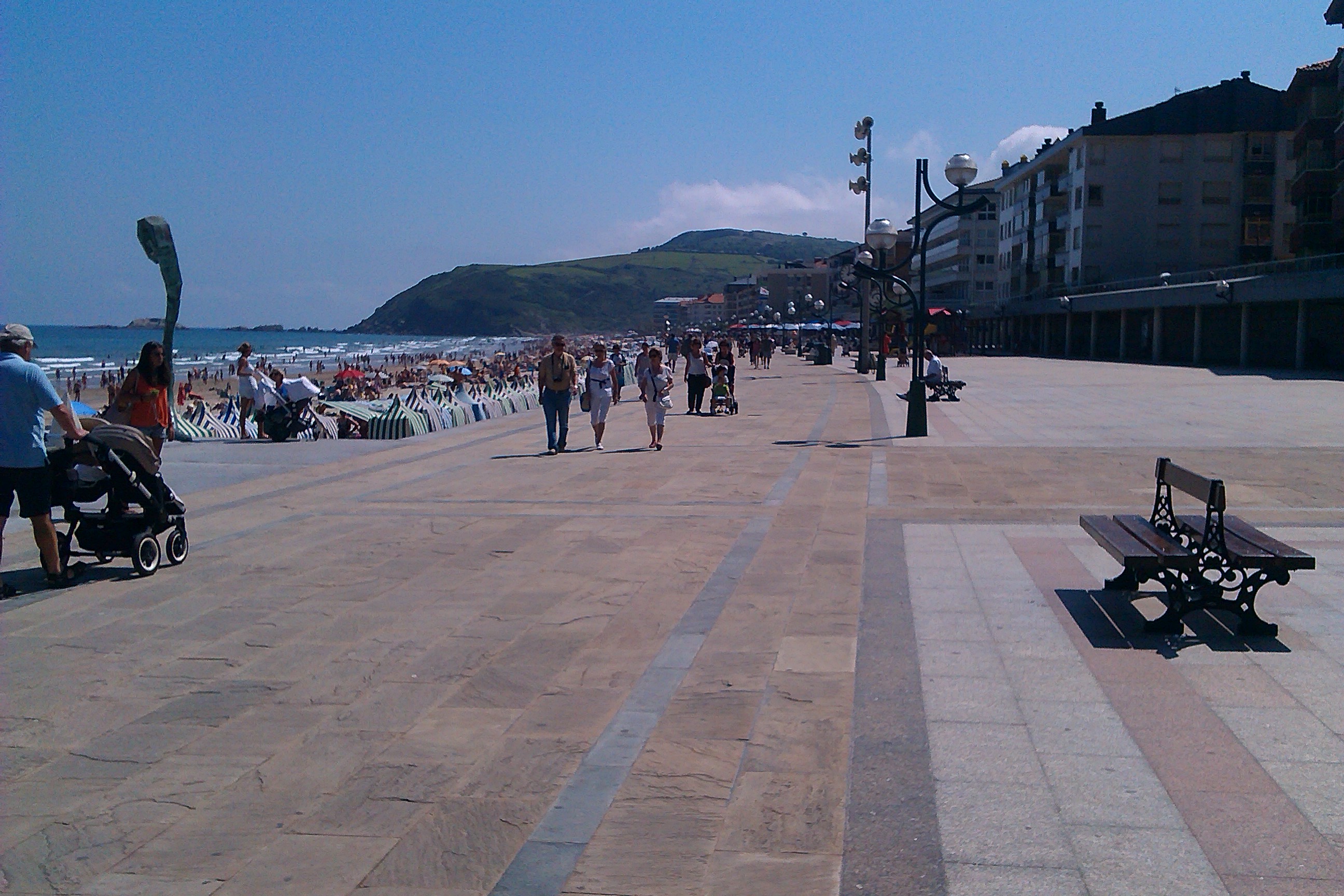
Zarautz, Guipuzkoa (Basque Country)

Located on the breathtaking Cantabrian Sea Coast, in the province of Guipuzkoa in the north of Spain, Zarautz is a popular resort town only 20 km away from the beautiful Donostia – San Sebastian city. With a population of about of 23,000 inhabitants, Zarautz is really a famous tourist destination of high quality in Spain for people who like enjoying its traditional cuisine and its excellent beach, as well as leisure activities and sports among others.

The old fishing village of Zarautz became a favorite destination for aristocracy and upper class people who chose Zarautz to enjoy the quiet beach during their holidays in the late 19th century. Nowadays, one of the most important economic sectors in Zarautz is really tourism. Therefore, Zarautz has focused on the preservation of its heritage cultural, its healthy lifestyle, its traditions and its natural surroundings so that Zarautz goes on being a tourist destination of the highest quality.


Gastronomy

Zarautz is known over all world for its delicious cuisine and its magnificent chefs who are used to cooking with the best and freshest ingredients. Moreover, the excellent food attracts not only local people, but also other visitors from other cities and countries. In fact, here tourists can find some of the most renowned restaurants and bars of Basque Country full of friendly people tasting the flavorful pintxos (a tiny haute cuisine) with the traditional txakoli (light white wine). If tourists visit the popular local market of Zarautz, they will certainly soak up the atmosphere of this town and understand its traditional gastronomy.


Beach and Sports

The Beach of Zarautz, which is one of the longest beaches in the Cantabrian Sea coast with more than 2,500 m long of fine golden sand and clear blue water, is other attraction for lovers of the outdoor activities, such as surfers who can enjoy the spectacular waves; golfers that can play golf in the Real Club of Golf of Zarautz which borders a part of the beach on the eastern area. Moreover the beach is also bordered by the lively promenade, the main meeting point of the town, where visitors can find a lot of excellent restaurants, bars, terraces, cafés, shops and have a lot of fun.

Visitors can also enjoy the outstanding natural landscape of Zarautz walking along its picturesque streets, taking a stroll about its peaceful surroundings as well as climbing its hills and mountains because there are facilities for most cultural and athletic activities. Besides, visitors can enjoy a breathtaking scenery if they decide to go to Getaria on foot bordering the Cantabrian sea coast. As for Getaria (Guetaria), it is a beautiful fishing village only 3 km away from Zarautz with medieval houses and the remarkable San Salvador’s church in Gothic style dating from 14th century. Both Zarautz and Getaria are connected by a spectacular promenade between the mountain and sea.

Zarautz can also offer tourists interesting buildings such as Santa María la Real’s Church built between the 15th and 16th centuries in Gothic style; the Zarautz Tower, which is the oldest building in Zarautz from the 15th century, is used for the Museum of Art and History and for the bell tower. Inside the church visitors can find several impressive Baroque altarpieces and the tomb of Lopez Martinez de Zarautz from 15th century; the four storey-Luzea Tower was built in the 15th century in Gothic style; the Narros Palace built in the mid 16th century in renaissance style with lovely gardens; the Portu House is a remarkable three-storey building from 16th century (Town Hall headquarters); Franciscans’ Convent Church from early 17th century; Makatxa House among others.

If visitors wander through the streets and squares, they will come across impressive sculptures, other magnificent buildings and beautiful gardens and parks that are worth visiting.


Other places to visit in The Basque Country (País Vasco)

– San Sebastian (Donostia):  Situated in the north of Spain on the Bay of Biscay coast, washed by the Cantabrian Sea, San Sebastian (or Donostia)  also known as Perla del Cantábrico (the Cantabrian Sea Pearl) is renowned for its spectacular natural beauty.

– Bilbao: Bilbao is one of the main cities of the Basque Country, in the north of Spain. It has more than 700.000 inhabitants, counting the city and the metropolitan area. In this article we are going to tell you about what are the best places to visit in the city, and how to visit them on foot in a two-days weekend.

Visiting Santander city (Cantabria)

Santander, which is certainly renowned for its beautiful bay and its magnificent beaches, is situated in the northern Spain, on the Cantabrian Sea coast. Surrounded by breathtaking scenery among its bay, the sea and green belts, Santander is an outstanding example of a natural landscape of great beauty, with a population of about 180,000 inhabitants it is the capital city of Cantabria region (Spain).

In the mid 19th century Santander became a perfect tourist destination for aristocracy, upper class and wealthy people who came to enjoy its lovely beaches, and its mild climate during the summer. Although in 1941 a disastrous fire destroyed a considerable part of its old town (Casco Antiguo), currently, Santander is also noteworthy for the quality of its architecture.

Nowadays, Santander not only has one of the most impressive bays in the world and magnificent beaches but also, gastronomy, sport, festivals, events, night-life, architecture, nature, culture, parks among other many more things. In fact, Santander is a holiday destination where tourists from all over the world choose to visit Santander in order to spend their holiday doing outdoor activities, enjoying its beaches, tasting its traditional cuisine or having a lot of fun at its parties, beaches and streets.


What to visit in Santander

Among the more imposing buildings is the Magdalena Palace that was built in the early 20th century on a hill in the Magdalena Peninsula surrounded by outstanding landscape. The king Alfonso XIII used to spend the summers in this palace until 1930. Currently, the palace hots events, exhibitions and summer courses at Menéndez Pelayo International University where more than seven thousand students attend the courses in Santander every year. This peninsula is itself a must-see place.

If visitors take a leisurely stroll along the elegant Sardinero Promenade, which is one of the most emblematic areas of the city, they will find the famous Sardinero Beaches, Gran Casino del Sardinero, the Auditorium, luxury hotels, restaurants, terraces, bares, cafés and, pubs, as well as the Piquio Gardens which are regarded as some of the most lovely places in Santander from where visitors can see wonderful views. The Sardinero Promenade is to the east of the city.

Paseo de Pereda is without a doubt the most remarkable area in Santander where people can enjoy the beautiful Pereda Gardens and historical buildings walking along the Paseo de Pereda and Castelar Street and bordering the impressive Bay of Santander, to the south of the city. Moreover, the seaport, the port of call, the marina, the pier, Palacete del Embarcadero, the Cathedral, the City Hall, the Plaza Porticada and Santander Bank are interesting places and building near the Pereda Gardens. This area is plenty of restaurants, cafés, terraces, glamorous shops and luxury hotels.

Santa Maria de la Asuncion Cathedral, which incorporates remains of a Roman structure that can be seen if you visit the Cathedral, was built on a hill between 14th and 17th centuries in Gothic style. It was severely damaged during the 1941 fire although it was rebuilt and widened. The cloister from 14th century in Gothic style. Besides, Cristo Church also known as Cripta is under the cathedral dating from 13th century was built on the site of a previous monastery in Gothic style too. By the way, the tomb of Marcelino Menéndez Pelayo ( 1856 -1912) is in this cathedral.

If tourists are interested in visiting museums theses are probably worth mentioning Modern Art, Menéndez Pelayo House, Fine Art, MMC Cantrabrian Maritime, Prehistory or Botin Art Center among others.


Sports and Beaches

Although there are a lot of facilities for football, swimming, surfing, windsurfing, horse riding and play golf, tennis and others in Santander, the natural surrounding with their beaches and sailing are really of main attractions. In fact, Santander hosted the Sailing World Championship 2014 (on 30th August to 21st September) where almost 1400 participants from 95 countries and more than 700 vessels took part in the competition.

Santander also has a lot of parks where people can do sport, walk or play such as Las Lamas Park, the largest Park in Santander with plenty of trees, a lake and the Palacio de Deportes (Sport Palace) at its main entrance, it is really more than a park is the green heart of Santander; Mataleña Golf Course is on a hill; Mataleña Park, with breathtaking views, borders the Cape Menor and arrives at Faro in Cape Mayor; El Faro (The lighthouse) is on a hill and measures 30 meters in height (90 meters over sea level), being erected in the mid 19th century, it is 2 km from city center. Mesones Park near Sardinero II beach is ideal for children; Water Park, Doctor Morales Park, La Alameda, the Jado Park among others without forgetting the Piquio Gardens.

Obviously Santander also has some of the most famous beaches in Spain all of them of the highest quality, with fine golden sand, clear waters and excellent facilities. Besides, the beauty of the landscape around the beaches has the additional advantage of being within walking distance of the city center. In addition, there are cultural events on the beaches.

Los Peligros Beach with quiet waters, measures about 200 meters in length by 70 meters in width; Magdalena Beach measures more than 800 meters in length by 30 meters in width and the Bikinis Beach is more than 200 meters long and 30 meters wide with quiet waters and soft breeze is easily reached from Magdalena Peninsula. These three beaches are situated to the south of Santander by the Paseo Reina Victoria and Magdalena Peninsula.

Situated to the east of the city visitors can find the busiest beaches:

El Camello measures 200 meters by 50 meters; La Concha Beach is 250 meters long and 20 meters wide located between Camello and Sardinero I beaches; Sardinero I Beach measures more than 300 meters in length by 80 meters in width with fine sand is very popular among tourists, it is next to Sardinero II Beach which measures about 1000 meters in length by 80 meters in width is the largest beach in Santander. All of them border the Sardinero Promenade.

Molinucos Beach is a small beach with fine and golden sand and often empty, it is about 30 meters long and 5 meters wide not far of Sardinero II Beach and near Mataleñas park. Mataleñas Beach which is very popular among local people, is located between the Cape Mayor and the Cape Menor near the Mataleñas Park in an area of natural beauty, measures about 120 meters by 40 meters.

Other beaches nearby:

Punta Parayas Beach is a artificial beach in Camargo it measures 50 meters in length by about 30 meters in width. Punta Parayas beach offers good facilities with green areas to walk and play, bicycle path, parking and so on.

El Bocal Beach 200 meters by 10meters and Maruca Beach 400 meters long and 10 meters wide are situated on the north coast of Santander in Monte with low occupation; Virgen del Mar Beach in San Roman de la Llanilla with 400 meters by 40 meters is an isolated beach to the north of village, here is the Chapel of the Virgin of the Sea ( Virgen del Mar) It is 5 km from Santander.


Gastronomy

It is well known that local people are justly proud of its traditional cuisine, the excellent and healthy food which is attractive not only for its aroma and exquisite taste, but also the quality of its savory anchovies, the fresh seafood, fish and meat, its famous green pepper, its tasty Pasiego cheese, delicious desserts and its flavorful wine make Santander an ideal tourist destination of the highest quality.

To sum up, we suggest enjoying the beaches, the food, the nightlife and do water sports. Visitors can arrive in Santander, by train, by car, by sea, by air. Santander is about 400 km from Madrid.


Cabarceno Nature Park

Cabarceno Park (15 Km. from Santander) is a zoo with a surface area of more than 7,000,000 square meters that preserves the conservation of the environment. There are giraffes, jaguars, rhinoceros, hippopotamus, zebras, bears, lions, elephants, tigers, deers, horses, wallabies and many much animals from Asia, Africa, America, Australia and Europe that visitors can see them living in freedom in a suitable area surrounded by nature.

Visitors will have the opportunity to enjoy the beauty of nature and wildlife in Cabarceno Park if they go on foot or by car through the paths and roads of park. Moreover, the park has excellent facilities to spend all day with children and old people. By the way, this park is one of most visited places in the northern Spain. The ticket costs between 7 to 25 euros.


Other places to visit in Cantabria region (Spain)

– Comillas: Comillas is an attractive town located on the Cantabrian Sea coast, in the north of Spain, indeed in an area of natural breathtaking beauty in Cantabria region.

– Potes: Visiting the beautiful villages in Cantabria region, in the north of Spain, tourists should not miss out on the medieval town of Potes whose traditional buildings, wooden balconies, steep streets and surrounding mountains make the Potes town an interesting tourist attraction place.

– Altamira Cave: Located in Santillana del Mar, was declared a World Heritage in 1985 by UNESCO.

Garachico, Tenerife (Canary Islands)

People visiting Tenerife island (Canary Islands / Islas Canarias) should not miss out on Garachico which is situated in the northwest of Tenerife Island between the steep mountain slopes and the volcanic rock cliffs on the Atlantic Ocean coast. Obviously, it is a scenery of indescribable natural beauty.
 

Garachico was founded in the late15th century and its seaport was possibly the most important port in the island during 16th and 17th centuries. However, in 1706 there was a volcanic eruption and the lava flowed from the Trevejo Volcano towards the sea destroying a part of the town and burying its commercial port. In fact, the beautiful bay disappeared under the volcanic lava while the natural rock pools were being formed on the coast, currently known as El Caletón.

Nowadays, this historical town with one population of about 5,000, and a pleasant mild climate all the year round, has a lot of to offer visitors in the way of traditional Canary architecture, extraordinary natural landscape, typical food, delicious wine, traditional dance, nature, culture, beaches, and above all, El Caletón of Garachico a natural swimming pools of black volcanic rocks, and the breathtaking views of its surroundings among other things.


What to visit in Garachico Town and Port (Tenerife)

Starting in the lively Plaza de la Libertad (Freedom Square) which is the main meeting point of the town and Glorieta de San Francisco next to Plaza de la Libertad visitors will be able to find the most important buildings of Garachico.

Santa Ana Church is one of the most beautiful and remarkable buildings of Garachico, dating in the mid 16th century was partly destroyed by the volcanic eruption in 1607 and rebuilt afterwards. Its square bell tower stand out from all the houses of Garachico. Inside the church there are an impressive altarpiece and other artworks which are worth visiting.

Convent of San Francisco of Asis, a two-storey building dating from 1524, there are exhibitions of Canary, volcanoes, photos and the Public Libray among other things; Our Lady of the Angels Church (Iglesia de Nuestra señora de los Angeles) dating from 1524, both buildings the Convent and Church form a magnificent architectural ensemble in traditional Canary style.

Casa del Marqués de la Quintana Roja in traditional Canary style was rebuilt after the volcanic eruption like the original building; La Casa de Piedra is an Art Space was also rebuilt; and City Hall building all of them are in Plaza de la Libertad.

Castle-Fortress of San Miguel dating from 16th century is situated on Atlantic Ocean Coast, next to El Caletón but fortunately the castle was not destroyed by the volcano in 1706. It takes 3 minutes on foot from Plaza de la Libertad to San Miguel Castle.

Puerta de Tierra is a picturesque park inside the town with exotic plants and remains of old port that remind us of the volcanic eruption. It is located next to the beautiful Plaza la Pila which has a spectacular view of Puerta de Tierra and surroundings. It takes 2 minutes on foot from Plaza de la Libertad.

Casa del Marques de Villafuerte, in traditional Canary style, was built in the late 17th century its geographical location avoided being destroyed by the volcanic eruption; and Concepcionistas Franciscanas Convent are also worth visiting.

Taking a leisurely walk along the promenade visitors will come across interesting sculptures, historical buildings and Casa el Molino an interesting old flour mills, after they will arrive at San Roque Chapel dating in the early 17th century which is near the New Marina.

The Garachico Rock, which is a islet to 300 meters far away from Garachico coast and rounded by Atlantic Ocean, has a surface area of 50,000 square meters with a wealth of native wildlife. Anyway, it is certainly a Natural Area and the visits are forbidden.


Beaches in Garachico

Due to its tropical trade winds, its annual average temperatures between 18 degrees and 24 degrees and its geographical location near the Teide National Park, the beaches and sport activities are of the main tourist attraction of Garachico.

El Caletón is situated on the site of the old port coast with natural swimming pools that were made during the volcanic eruption. It is often crowded of tourists with adequate facilities for all the family. Visitors should not leave Garachico without enjoying the beautiful pools.

The Muelle Beach, located in the old bay of Garachico is a lovely and excellent beach with black sand and clear blue water. It is highly popular with tourists and local people. It is near El Caletón.

Las Aguas Beach, situated next to New Marina is larger, quieter and more secluded than the Muelle Beach with black sand, clear blue water, plenty of free space and a beautiful landscape.

Other beaches of Garachico: Gomero, La Caleta, Guincho and La Madalena.

By the way, Mount Teide (El Teide) is one of the tallest volcano in the world and the highest peak in Spain at 3,718 meters above sea level it occupies a majestic location in the center of the Canary Island known as Teide National Park was declared a World Heritage site in 2007 by UNESCO.


More places to visit in Canary Islands (Spain)

– Read here all ours places in the Canary Islands (Las Islas Canarias – España).

– Tenerife: Dont dofget visiting  Santa Cruz de Tenerife, and Icod de Vinos.

Visiting Comillas Town (Cantabria Region)

Comillas is an attractive town located on the Cantabrian Sea coast, in the north of Spain, indeed in an area of natural breathtaking beauty in Cantabria region.


Having a population of about 2,500, a welcoming atmosphere, a unique architecture, quiet sandy beaches and beautiful surroundings, Comillas has really attracted plenty of visitors to the town since the 19th century. Moreover, being regarded as a tourist destination of the highest quality, Comillas also has a lot of to offer visitors in the way of culture, nature, history, festivals, leisure activities, gastronomy and nightlife among others.


What to visit in Comillas

The Capricho de Gaudí, which is the most remarkable building in Comillas, was built between 1883 and 1885 in modernist style by the world renowned architect Antoni Gaudí i Cornet (1852 -1926). This outstanding three storey building with one fine decorated tower in shape of a doll house was the summer house of the brother in-law of the Marquis of Comillas. The Capricho de Gaudí is the most visited building in Comilla, therefore, a visit here should almost be obligatory for all tourists who arrive at Comillas. Do not forget the Palacio de Sobrellano is in the same park nearby.

Palacio de Sobrellano y su Capilla/Panteón (the Sobrellano Palace and Chapel – Mausoleum) also known as the Palace of the Marquis of Comillas was built between 1878-1888 by the architect Joan Martorell i Montells (1833-1906) and supervised by the architect Cristóbal Cascante Colom (1851-1889) in Neo-gothic style. Although the Chapel – Mausoleum was built before the Palace, the Chapel is regarded as a masterpiece of modernist architecture in Cantabria. The stunning palace was home of the Marquis of Comillas and in the chapel is his mausoleum.

By the way, the Comillas Marquises (Antonio López López (1817-1883) and his son Claudio López Bru (1853-1925) ) were great benefactors of Comillas town, (first Marquis’s place birth).

The imposing Universidad Pontificia (Pontifical University), which is one of most remarkable buildings in Comillas, in several styles (Gothic-Mudejar, modernist), was built between 1883-1892 by the architect Joan Martorell i Montells and Cristóbal Cascante and decorated by the architect Luis Doménech i Montaner (1850-1923) in a hill area of the town of Comillas.

The Statue of the Marquis of Comillas (Estatua del Marqués de Comillas) was built in 1883 in modernist style by Doménech i Montaner and Cristóbal Cascante Colom. It is situated on a hill area with a wonderful panoramic viewpoint of the beaches.

Moro’s Gate was built in 1900 by Antonio Gaudí in modernist style, the gate has three doorways one for cars, other for people and a tiny one for birds.

People interested in visiting cemeteries should not miss out on the historical Cemetery of Comillas which was renovated in 1893 by the architect Doménech i Montaner. If tourists visit this cemetery they will be certainly spellbound when they come across the spellbinding sculptures and other interesting constructions.

Taking a walk along its streets visitors can enjoy its old neighborhood with steep stone streets, picturesque squares, big mansions, typical houses with wooden balconies portraying the most traditional Cantabria architecture. Besides bars, restaurants, terraces and cafés can be found in its pedestrian squares with a friendly atmosphere.

Fuente de los tres caños (The fountain of the three water pipes) was built in 1899 by Doménech i Montaner in modernist style, and Casa Ocejo dating from the 19th century, and other interesting buildings and monuments can be seen in the old neighborhood.

The traditional port was built between 17th and 18th centuries. However, the fishing activity and the seaweed are still fished and collected by local people as many years ago.


Beaches in Comillas

It is said that some of the best beaches on the coast are found in Cantabria. Its clean and sandy beaches, its clear blue water, its high quality and beautiful landscape is very difficult to overcome.

In addition, Comillas has much more to offer in sport, walking routes, cycling routes, and so on.  Comillas is 426 km from Madrid and 47 km from Santander.


More places to visit in Cantabria (Spain)

– Cantabria Region: Check all our posts about this region, in the north of Spain.

– Santillana del Mar and Altamira Cave: The Altamira Cave (Cueva de Altamira), located in Santillana del Mar was declared a World Heritage by UNESCO.

– Potes town: Visiting the beautiful villages in Cantabria, in the north of Spain, tourists should not miss out on the medieval town of Potes whose traditional buildings, wooden balconies, steep streets and surrounding mountains make the Potes town an interesting tourist attraction place.

Cadiz City: What to visit in Cadiz (Andalusia)

Situated on a small peninsula in the Andalusia region, on the southwest Spanish coast, Cádiz is bordered by the Atlantic Ocean and joined to the Iberian Peninsula (San Fernando town) by a long narrow isthmus. Its ideal geographical location, its mild, warm and sunny weather almost all year round, and its well preserved cultural and historical heritage make Cádiz an attractive tourist destination.


Cádiz is the oldest city in Spain, was founded 3,100 years ago by the Phoenicians (Fenicios) who named it Gadir and in the 3th century the Romans called it Gades, therefore, people who are born in Cádiz are called Gaditanos. Besides, when Phoenicians, Greeks, Romans, Visigoths and Muslims inhabited here they left an unmistakable cultural imprint on Cádiz which was conquered by the King of Castilla Alfonso X El Sabio ( 1221-1284) in 1262.

Nowadays, Cádiz and the Iberian Peninsula are linked by the isthmus, the Carranza Bridge, which was built between 1960 and 1970 of 1400 meters long, and the Puente de la Constitución de 1812 (Bridge of the Constitution of 1812) also called La Pepa Bridge that was built between 2007 and 2014. Being the longest bridge in Spain (1,655 meters in length over the sea), La Pepa Bridge was designed by the world renowned engineer Javier Manterola who was born in 1936 in Pamplona. It is said that the Drawbridge of the Constitution of 1812 is going to be the most emblematic construction of Cádiz. Both the Carranza and La Pepa bridges cross over the Bay of Cádiz from Puerto Real town to Cádiz.

Cádiz, with a population of about 135,000, has a lot of to offer in the way of architecture, culture, gastronomy, entertainment, carnivals, flamenco, beaches, nightlife among others without forgetting its important seaport.


What to visit in Cádiz city

Firstly, we suggest taking a leisurely walk through its historical walled town (casco antiguo), enjoying its narrow streets, alleys and typical squares sensing the friendly atmosphere of the neighborhoods which still retain a lot of its traditional charm. Moreover, local people really have a lot of fun and open mind.

The Cathedral Square, one the most popular places in Cádiz, is in the medieval Pópulo quarter, which is really the oldest part of the city, visitors will be able to find the most remarkable buildings of Cádiz, such as the imposing Cathedral also known as New Cathedral in Baroque and neoclassical style that was built between 18th and 19th centuries and designed by Vicente Acero. Here is the tomb the world renowned musician Manuel de Falla. Besides, if visitors go up the Poniente Tower they will be able to enjoy a breathtaking view of the golden dome, the city and surroundings. It is worth a visit.

Following the walk from Cathedral Square people can go under the Arco de la Rosa (Rose Arch) from 13th century, it was a gateway to the walled town built by Alfonso X (1221-1284). This Pasaje de la Rosa ( Rose Passage) goes to San Martín Square, here are the Casa del Almirante with facade from 17th century in Baroque style, and the Church of the Carmen dating from 18th century in Baroque style inside a fine altarpiece from 18th century. If visitors take the Obispo Rances Street, they will arrive at The Fray Félix Square one of the most interesting spot.

Santa Cruz Church, (also known as the Old Cathedral) was finished its construction in the early 17th century by Cristobal de Rojas in Renaissance style. Being the first Cathedral of Cádiz until 1838, Santa Cruz Church was built on the site of a previous church destroyed in the late 16th century, which had been built on the site of a mosque. Inside Santa Cruz Church its main altarpiece, the Genoveses Chapel and the Urn and the Christ of Holy are worthy of mention. The Sagrario Tower and the Cathedral Museum next to Santa Cruz Church are also must see places.

Casa del Obispo ( Bishop’s Palace) between the New Cathedral and the Fray Felix Square ( Santa Cruz Church ) is the most important archaeological remains of the city ( Phoenicians, Romans and medievals) can still been seen in this palace.

Teatro Romano (the Roman Theater) was built in the late first century before of Christ being the largest Roman Theater in Spain. It was discovered in 1980 by chance. It is next to Santa Cruz Church too.

Other interesting places in this quarter of Pópulo are: The Arco del Pópulo (Pópulo Arch) from 13th century was other gateway of the walled city built by Alfonso X (in Fabio Rufino Street). Arco de los Blancos (White Arch) of four Arches was part of a medieval castle and other gateway from 13th century. It is in San Juan de Dios Street next to the Roman Theater .

If tourists visit the Pópulo neighborhood they will be able to enjoy its shops, cafés, taverns, traditional dishes, delicious tapas and wines spending their free time sitting in its open air terraces because the weather in Cádiz is usually excellent.

By the way, the promenade goes around the old town so the Cathedral, Casa del Obispo, Santa Cruz Church, Roman Theater and other places can also be reached by Campo del Sur Avenue (Paseo Maritimo).

It is said that flamenco song was born of the people of Santa María neighborhood, so the music roots come alive in its streets. If people want to know more about flamenco, they will probably have a first contact with Flamenco in this neighborhood.

Puertas de Tierras one of the most emblematic monument of Cádiz separates the Old walled Town from the modern Cádiz city.

The Town Hall building, which was built in the early 19th century in neoclassical style, has a beautiful facade and is located in the lively San Juan de Dios Square one meeting point in the heart of Cádiz.

Museo del Vinos y Toros de Cádiz (Wines and Bulls Museum) is an exhibition about wines and bulls in where visitors can taste the delicious wine from Cádiz and know more about the traditional bullfights ( a spectacle in which a man fights and kill a bull).

In middle of the Spain Square people can find the magnificent Monument to the Constitution of 1812 which was raised in 1912, and other interesting buildings such as the Customs and the House of the Four Towers. Do not miss out on the port and pier on the Cádiz Bay nearby.

Oratorio de la Santa Cueva, which consists in two outstanding chapels, is considered to be a masterpiece of the neoclassical Gaditano, decorating with paintings by Francisco de Goya, Zacarias Gónzalez and others world renowned arts.

People interested in art should visit the Cádiz Museum where they not only will find paintings by Zurbarán, Murillo, Rubens, Alonso Cano among others but also archaeology, art and history. Is is in La Mina Square.

Alameda Apodaca is a popular area with plenty of trees, benches, fountains and gardens an ideal area to walk and rest, above all in summer. It is in the north of the city near the Candelaria Bastion from 17th century and the Cádiz Museum.

Genovés Park is the most beautiful and important green area in Cádiz, plenty of plants, trees, fountains, gardens benches is a real botanic park where people can enjoy walking along its avenues and squares. It is situated in the old town between Santa Catalina Castle and Candelaria Bastion and near the Caleta beach.

Grant Falla Theater was built between 1884 and 1905 on the site of the previous theater brunt in neomúdejar style. It is worth a visit and near Genovés Park.

The lively Viña quarter is certainly popular not only among Cádiz residents, but also with tourists elsewhere in Spain and other countries, with plenty of typical bars, cafés, restaurant where serve traditional dishes, tasty cook fish and delicious wine. The Santa María Square is a typical meeting point in the heart of this neighborhood which comes alive with citizens and tourists dancing and signing during the Carnivals.

San Sebatian Castle dates from 19th century is a fortress on a small islet in La Caleta washed by the sea. Inside there is the lighthouse set up in the early 20th century, it measures more than 40 meters in length.

The coastal Castillo de Santa Catalina was constructed in the 17th century is a fortress by La Caleta beach.

Other interesting place is the Hospital de Mujeres (Women Hospital) in gaditano Baroque style and its chapel where there is one noteworthy painting by El Greco. It is near Oratorio San Felipe.

Oratorio San Felipe Neri (Saint Felipe Neri Church) in Baroque style has a Baroque altarpiece dating in the mid 18th century with a beautiful painting by Murillo, next to this Church is the Museo de las Cortes de Cádiz (Cortes of Cádiz Museum ) about Cádiz Constitution.

The watch Tavira Tower from 18th century is one of the most visited places in Cádiz, it has the Camera Obscure that allow visitors to watch the city and the terrace from where people can also see a spectacular views of Cadiz. It is near the Oratorio

Plaza de Abastos (Abasto Square) is a traditional Gaditano market, although most tourists come here to taste its typical tapas and wine in the bars nearby and have a look around the Flowers Square the main shopping area.


Beaches in Cádiz city- Costa de la Luz (Coast of the Light)

Obviously Cádiz has many beautiful and sunny beaches most of them are formed by fine golden sand dunes its clear blue water attracts tourists and citizens who enjoy its excellent weather.

La Caleta beach of fine and golden sand is the most popular beach in Cádiz because it has bars, restaurants, excellent facilities even flamenco club and is situated between San Sebastian and Santa Catalina Castles in the old historical town so it is often plenty of tourists and local people.

– Santa María del Mar beach of golden sand is the smallest beach of Cádiz. Situated next to La Victoria beach is often crowded.

– La Victoria beach stretches for more than 2,900 meters. It is by the promenade in the modern area of Cadiz. Having excellent facilities La Victoria is usually plenty of people of all ages.

– The Cortadura beach of fine golden sand dunes is located in the isthmus between Cádiz and San Fernando town. It is easy to get on foot and measures about 2,500 meters in length, secluded but plenty of free space.

– El Chato or Torregorda beach is located between the Cortadura and the Composto beaches it is similar to the Cortadura beach but more than 2,600 meters long.

Cádiz has more beaches, other interesting places, a lot of fun, tasty food. good wine, a very pleasant weather, lively nightlife, dancing and flamenco and so on.


More cities and towns to visit near Cadiz

– Tarifa: The most southerly town of Spain.

– Andalucia / Andalusia region: Read here all about this region, including cities as Grandada, Cordoba or Sevilla.

Search places

More places