Showing posts with label Aragón. Show all posts

What to see in Canfranc Station (Pyrenees, Huesca)


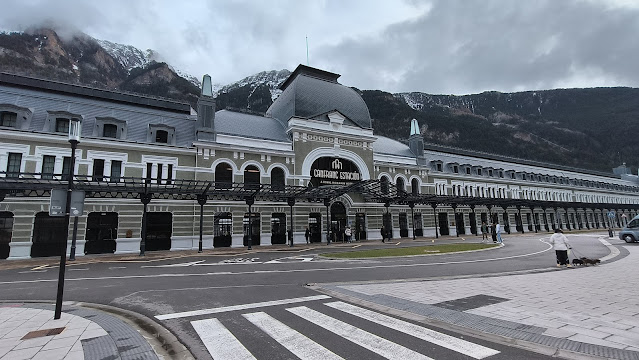
Canfranc railway station (Estación de tren de Canfranc Canfranc-Estación) is a historic building located in the Aragonese Pyrenees (Huesca, Aragón), on the border between Spain and France. It is made up of a complex of buildings that are unique both for their elegant appearance and their history. 

This station played an important role in the first half of the 20th century as a railway station connecting Aragon with France, especially during the Spanish Civil War and World War II. 

The town of Canfranc (and Canfranc-Estación) is located north of Jaca, on the border with France. It is usually visited by car, but can also be visited by train, stopping at the new railway station.


Canfranc International Railway Station (historic building) and its surroundings

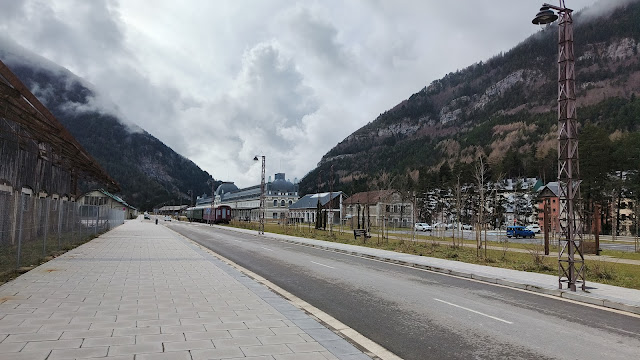
The main historical building of the railway station was built in 1915-25 and closed in 1945-49, remaining almost abandoned for many years, but being highly popular and remembered for its history and architectural beauty. Around the building you can see the railway tracks, 20th century railway machinery (cranes, etc.), warehouses and goods transfer areas.

The beauty of the site lies not only in the uniqueness of the building in the middle of the mountains, but also in the landscape and nature surrounding the ensemble of buildings and open areas.

Today the main building of the station is restored and transformed into a luxury hotel. The restoration of the area was done between 2017 and 2023. Today the area can be visited, being a well-remembered part of the history of the trains and the recent history of Aragon (see more information here).

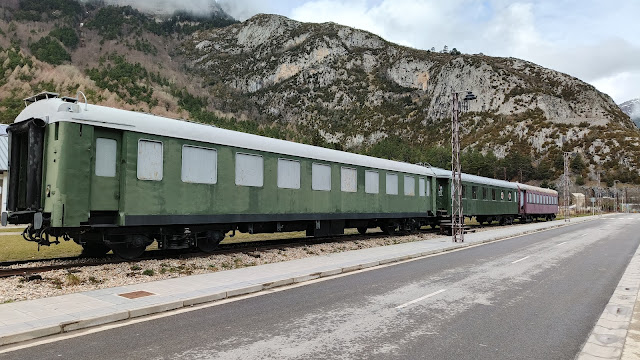
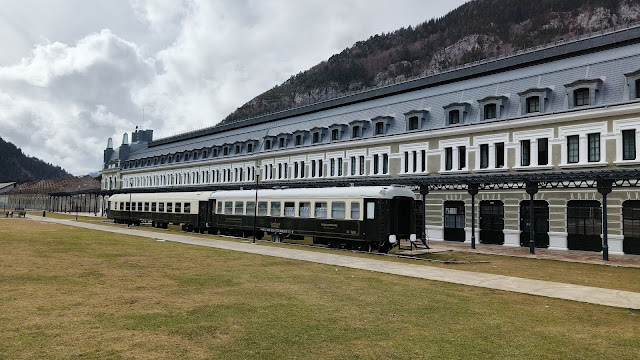
The area has a garden-museum (Jardín Ferroviario) in the surrounding area where you can see old train carriages and machinery of the time. There are also walking routes nearby where you can go on nature excursions.


Photos of the historic station (now a hotel):


Gardens, wagons, train tracks and old machinery (Railway Garden / Jardín Ferroviario):


Franco-Aragonese cuisine restaurant car:


Photos of the interior of the hotel:


Walking routes in the surrounding area:


Canfranc town, Somport Tunnel and the new railway station

Canfranc (urban centre) is located next to the station. The town is divided into two population nuclei: Canfranc village and Canfranc Station, both very close to each other.

Canfranc is a small town well known, apart from the railway station, for being next to the French border, as well as for the ski resorts in the area and for its nature. It is a small town but very popular with tourists, with hotels, restaurants and shops. 

The new train station, currently open, is located just behind the historic building of the old station. Also, next to the area is the Somport Tunnel. This tunnel connects this area of the Pyrenees with France by road. It is 8.6 km long and the current tunnel was opened in 2003.

New train station:


Signs: Map of Canfranc International Station, Explanada de los Arañones, photos and history of the place.

Photo: Inauguration of the International Station. 18 July 1928.


Other nearby places to visit

Nearby places: Jaca, Villanúa, Sabiñánigo, Huesca.

Ski resorts: The nearest ski stations are Astún and Candanchú.

Hiking in the Pyrenees: Aisa, Estarrún River and Igüer Valley (Huesca)


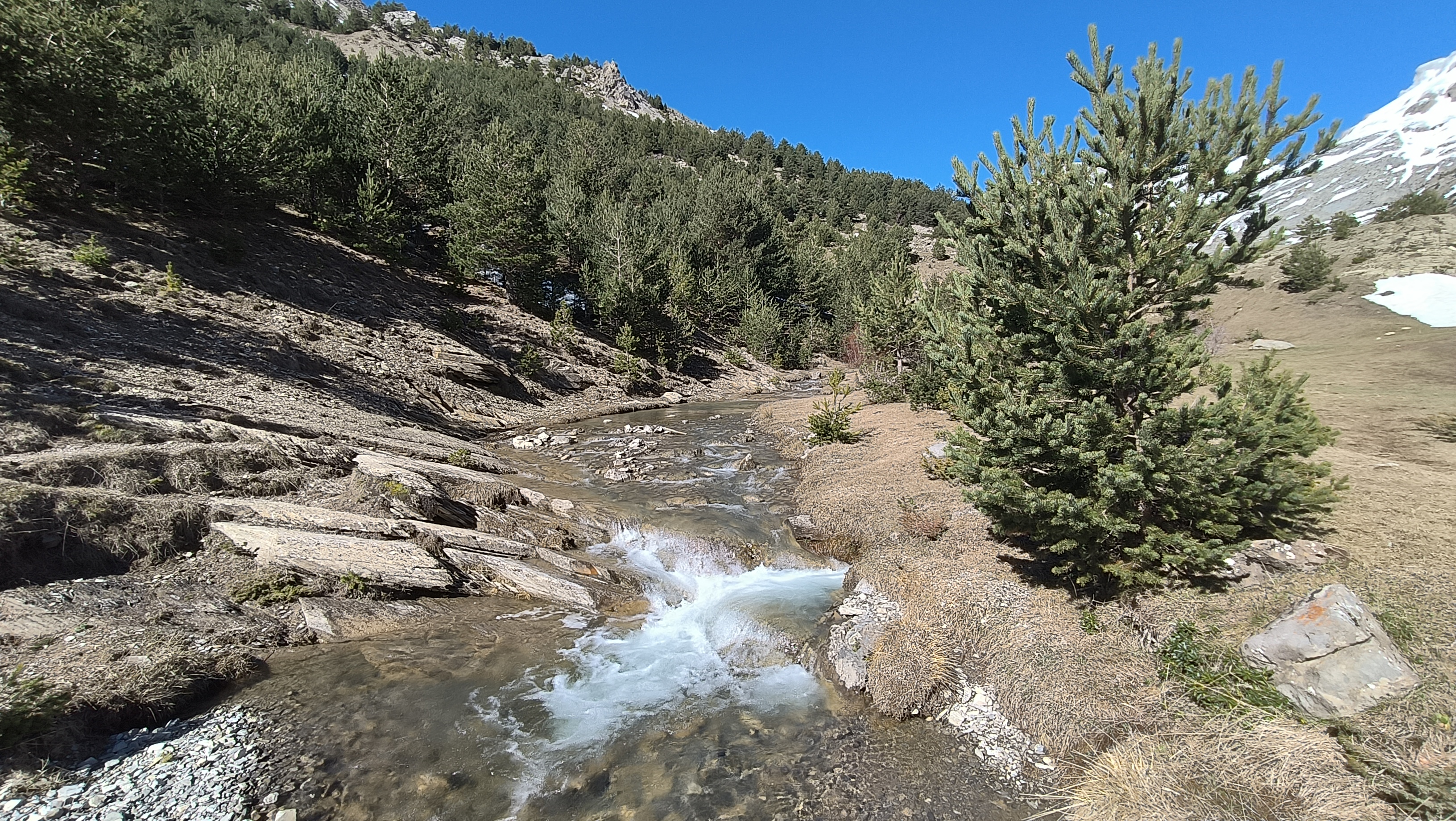
The Aragonese Pyrenees (in the province of Huesca, Aragon) have hundreds of routes and trails for walking or snowshoeing in winter, for all kinds of walks, excursions, climbing and mountain sports, of all levels of difficulty.

In the area surrounding the city of Jaca, we find the town of Aisa (not to be mistaken with Ainsa, also in the Aragonese Pyrenees), where we can find some of these routes.


The village of Aisa

Aisa is to the north of Jaca, halfway between Jaca and the French border, near Villanúa, Castiello de Jaca and Borau. To get there from Jaca, take the road north out of Jaca (N330 Road), then turn left onto another narrower road. 

The journey from Jaca to Aisa takes approximately 30 minutes by car. It is a small village with a bar and, among its architecture, its church stands out.


Walking routes from Aisa

From Aisa, you can find several places where you can go on nature trails. Many of these routes can be reached by car along various paths. The routes in this area are quite easy, suitable for the whole family at any time of the year.


Signposts, parking area and maps of the zone: 

Ruta del Puerto de Aisa (Aisa mountain pass route), Collado de Rigüelo, Pico Aspe, El Chorrotal, Cerro Peñarruaba, Valle de Igüer, La Cleta parking area, Ibón de Izagra, Collado del Bozo, Río Estarrún, Pozas del Río Estarrún (Estarrún river, Estarrún river pools). SL-HU 105 Route.


Other places to visit in the Aragonese Pyrenees

Near Aisa is the town of Jaca in the south and Canfranc in the north, next to the French border. In the Pyrenees you can enjoy nature activities all year round, both in summer and winter.

In winter, the ski tracks are famous. Formigal and Cerler stand out among them. Panticosa (40km of ski slopes) is a smaller resort, ideal for occasional skiers. Other stations in Aragon are Astún, Candanchú and Valdelinares. 

The Roman Museums of Zaragoza: The Caesaraugusta Route

Caesaraugusta (Zaragoza) was the only city in the Roman Empire that enjoyed the privilege of bearing the full name of the Emperor Caesar Augustus, founder of the city.

The Caesaraugusta Route is composed of four museums located in the historic centre of Zaragoza, which will allow us to discover how life was lived in this city during Roman times two millennia ago. These museums are a must for anyone who wants to learn about the history of the city and the Iberian Peninsula. 

Each of these sites are excavated underground in their original location in Roman times. The buildings that can be visited date from the 1st and 2nd centuries AD. All four sites can be visited on foot in one day, and tickets can be purchased together or separately at a very affordable price.


The museums: Theatre, Thermal Baths, Forum and Port

Below you can see what each of the museums consists of:

- Theatre Museum: The Roman theatre of Zaragoza was discovered in 1972 after an intense search, as its exact location was unknown, as it was hidden under the earth and the buildings that were built on top of it for several centuries. Since its discovery, work has been undertaken to accommodate the area and restore it to convert it into the current museum that can be visited today. 

The theatre was built in the 1st century AD, at the time of Emperor Tiberius and had a capacity for 6,000 spectators, one of the largest in Roman Hispania.

- Thermal Baths Museum: The thermal baths of Caesaraugusta also date back to the 1st century AD. The thermal baths were the place to go to cleanse, relax, as well as to have a social life. They had warm and cold rooms, as well as attached rooms such as changing rooms and a gymnasium.

- Forum Museum: This museum is located in the underground of the Plaza del Pilar, next to the Cathedral of La Seo. The forum was the public part of the Roman city where you could find shops as well as administrative buildings, and it was also the centre of civil, political and religious activity in the Roman city. 

In the museum you can see the foundations of the buildings, as well as all kinds of objects from the period, as well as video projections on the history of the city.

- Port Museum: Finally, this museum is next to the Ebro River, and shows us what the city's river port was like in Roman times. 


Photos of the Roman Theatre:


Photos of the Forum (exterior facade, as the site of the visit is underground):


Location map

Below you can see the map with the museums (click to zoom). You can walk from one place to another. 

The approximate duration of the visit is: 1:30 hours Theatre, 1 hour Forum, 30 minutes Baths and 30 minutes Port.
 

Other places to visit in Zaragoza

- Plaza del Pilar: Facing the Basilica del Pilar and the Cathedral of La Seo, the Plaza del Pilar is one of the best known and most emblematic public spaces in Zaragoza.

- Monument to Caesar Augustus and Roman Wall.

- Puerta del Carmen.

- La Aljafería: A must-see for all tourists coming to Zaragoza. This is the most visited historical site in the city: A medieval Islamic palace built by the Muslims in the 11th century.

- Other museums in Zaragoza: Pablo Gargallo Museum, Museum of Natural Sciences, Pablo Serrano Museum, CaixaForum Zaragoza, Aquarium of Zaragoza, etc.

What to see in Monasterio de Piedra (Stone Monastery), Nuévalos (Zaragoza)

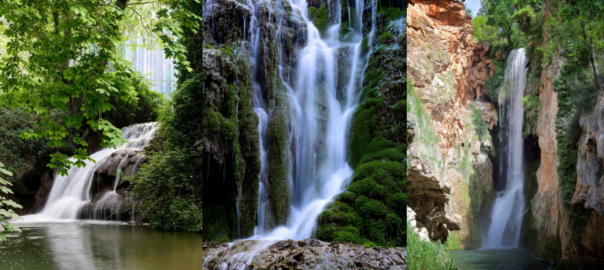
Nowadays, Monasterio de Piedra (Stone Monastery) is one of the best tourist destination in Nuevalos, (Zaragoza Province, Aragón, Spain) for people who like enjoying of the flavour of the traditional cuisine, good wine, natural environments and impressive landscapes. In fact, the medieval Monasterio de Piedra is now an outstanding complex with an excellent hotel and a beautiful natural park well known for its fascinating waterfalls.

Monasterio de Piedra is located on the left bank of the River Piedra, only 27 km from Calatayud, 111 km from Zaragoza/Saragossa and 200 km from Madrid.


Monasterio de Piedra: Buildings

The first buildings of the monastic settlement were built of wood and mud bricks (adobes) by Cistercian monks who had arrived from Poblet Monastery in 1194.

The construction of the Medieval Monastery de Nuestra Señora de Piedra was begun in the year 1203 in a quiet place near Pied


ra River in Gothic architectual style and in 1218 was the consecration of the abbey church. The buildings were built as many cistercian monateries, a standard layout or a typical design of the cistercian order was repeated with its abbey church beside the cloister and the rooms spread around the cloister. Besides a vegetable garden and a high wall surrounding the monastery. In addition a Renaissance Palace and others Barroque building were built between 15th and 16th centuries.

In 1809 the cistercian monks were expelled from the Monastery and 5 years later the monks returned to the Monastery. In 1820 they were expelled from the Monastery again and they returned to the Monastery in 1823. The monks remained in the Monastery until 1835.


Monasterio de Piedra: Natural Park

In the middle of the 19th century the medieval monastery and the vegetable garden were bought by Pablo Muntadas. The buildings of the monastery were adapted as a first class hotel to provide all services. The vegetable garden was transformed into a space with an exceptional landscape where people can also walk and
enjoy the impressive waterfalls, lakes, caves and nature. In addition, if tourists like outdoor activities in natural surroundings such as hiking they will never forget this park.

Monasterio de Piedra: Hotel

The 12th century tower of the tribute gives visitors a cozy welcome before going into the walled Monastery of Piedra Hotel. The buildings of the medieval monastery were transformed into a comfortable hotel, the church of the Monastery which is in ruins is used for events, there are others magnificent buildings which are well preserved. So visitors can see and enjoy the cloister from 13rd century, the chapterhouse, the refectory, the kitchen, the cilla, the dormitories, the library, and so on

If tourists like nature, flora and fauna do not miss the opportun
ity to visit the Monasterio de Piedra.
 

More places to visit in Zaragoza Province

Zaragoza city: With almost 700,000 inhabitants, Zaragoza (Saragossa) is one of the biggest cities of Spain. Its strategical location between Madrid, Barcelona, Valencia and Bilbao, and its proximity to The Pyrenees and France, make Zaragoza one of the most important logistic points of Spain.

– Calatayud city.

– Tarazona city: Tourists visiting Aragón region should not miss the chance to visit Tarazona. In fact, the town really has an impressive ensemble of Mudéjar buildings, as well as an interesting old quarter (casco antiguo) with an exceptional historic and artistic heritage where Jews, Muslims and Christians coexisted for a long time in the medieval times leaving an unmistakable cultural imprint on Tarazona.

San Pablo Church (Iglesia de San Pablo) Zaragoza

The Mudéjar San Pablo Church (Iglesia de San Pablo) is the third most important Catholic Church in Saragossa city, after La Seo del Salvador and the Basilica of Our Lady of the Pilar, both buildings are situated in the Cathedrals Square. San Pablo’s Church is situated between San Pablo and San Blas streets, in the traditional San Pablo neighborhood, also known as “El Gancho” in the historical center. Not far of this church are the Roman Walls, Central Market and Pilar Square, the main tourist area of the city. It is worth mentioning that San Pablo’s Church together with La Seo, Aljaferia Palace and several other buildings form part of the Mudéjar Architecture of Aragón which was declared a World Heritage site by UNESCO in December 2001 as the most representative Mudéjar Architecture of Aragón.


Built on the site where another temple stood previously, San Pablo’s Church was built with bricks in Mudéjar style between the late 13th and early 14th centuries. The first construction had a rectangular nave and the bell tower. Afte that, two lateral naves were added to the first nave at the end the 14th century. Moreover, it was several times remodeled and renovated between the 16th and 18th centuries and restored in the late 20th century.


A visit inside the church enables us to see a whole set of artworks, as well as its impressive high altar in polychromed wood by Damian Forment dating from 1515 (Gothic Renaissance), a jewel of art in Aragón. Inside visitors can also enjoy its interesting paintings, chapels, the choir and its magnificent organ with its original Gothic box which dates from the 15th century, although some of the pipes and other parts of the organ represent interventions in the 16th and 19th centuries.

The octagonal bell tower was built in the mid 14th century in Mudéjar style and decorated with bricks and glazed tiles, the seventh floor and the spire were added in the 17th century. The beautiful tower is 66 meters high and has seven floors which can be climbed stairs in order to reach the top, from where the visitors can enjoy a panoramic view of Saragossa. Due to that the tower was constructed before adding the two lateral naves to the building the tower’s base and its first floor are situated inside the church.


Mudéjar art is a style unique to Spain. Its forms, techniques and decoration of Aragonese Mudéjar art are characterized by the refined use of brick and glazed tiles in its architecture. People interested in Mudéjar art should not leave without visiting the elegant tower and go up the stairs to the seventh floor because San Pablo’s Church is worth visiting. The guided visit of San Pablo’s Church, cloister and tower costs 4 euros, we suggest that visitors book it in advance.


More places to visit in Zaragoza (Aragón, Spain)

– Basílica del Pilar: The Pilar Cathedral (also called Basilica del Pilar) is the most famous icon of Saragossa. This church is placed in the centre of the city at Pilar Square (Plaza del Pilar), near the Ebro river and in the same square than “La Seo”.

– La Seo Cathedral: Salvador Cathedral (popularly, La Seo), in Zaragoza was declared a World of Heritage site by UNESCO as one of the most representative Mudéjar architecture of Aragón.

– Paseo Independencia (Independence Avenue): The main street of Zaragoza. Beginning at the end of Gran Via, the avenue runs from Plaza Paraiso all the way to Plaza España.

– La Aljafería: A must for all tourists that arrive in Saragossa is to visit the stunning Aljaferia Palace, which is really the most visited historic site in Saragossa. This medieval Islamic palace was built by Muslims on the banks of the river Ebro in the 11th century.

– Expo 2008 Zone:  In summer 2008, Saragossa received the international exposition Expo Zaragoza 2008, which was placed aside the shore of the Ebro River. Currently, the Expo Zone is open to all the visitors who want to see the area and enjoy its activities.

Pilar Square of Saragossa (Plaza del Pilar de Zaragoza)

Located in the very heart of Saragossa (Zaragoza) city and near the Ebro River, the spectacular Pilar Square is a site of significant historic heritage that is enjoyable and accessible by citizens and visitors. It is a lively place often used for a wide range of public events, celebrations and music performances throughout the year, such as, the popular Offering of Flowers, when people from all over the world come here to offer flowers to the Virgin del Pilar, and different groups of performers sing and dance traditional songs in the square on the 12th Octuber; San Valero cake (on 29th January and On New Year’s Eve, when citizens come here to join in the fun in order to eat the grapes. Moreover, the Easter Week Processions, one of the most interesting events in Zaragoza with drums and bass drums that has preserved its traditional values since the 13th century In fact, Pilar Square is one of Saragossa’s most recognized public spaces.


Pilar Square and The two Cathedrals

No visit to Saragossa will be complete without spending some time in Pilar Square, here people can see not only “El Pilar” Cathedral but also La Lonja, the City Hall and the Hispanidad Fountain. Moreover, “La Seo” cathedral, several interesting museums, San Juan de los Panetes’ church, El Torreon de La Zuda, the Roman Walls, the Stone Bridge over the Ebro River, Mercado de Lanuza ( Central market ) and Santa Isabel’s church are all nearby. If visitors want a break from sightseeing, they will certainly enjoy walking along the lively pedestrian Alfonso street, the most famous street in Saragossa with traditional buildings, elegant shops, excellent cafés and restaurants. By the way, visitors will find a lot of beautiful statues, sculptures, monuments and other interesting things if they take a stroll around this area.


La Lonja and The City Hall

La Lonja de Mercaderes de Zaragoza was built to serve as a market exchange for merchants between 1541 and 1551 in Renaissance style. Designer by the renowned architect Juan de Sariñena (14??-1545), who died before it was finished, La Lonja is regarded as his masterpiece. In fact, it is one of the buildings most remarkable of the Aragonese civil architecture of the 16th century in Aragón. The building is rectangular in plan and inside the magnificent hall is divided into three aisles by five rows of slender pillars (24) from which spring the beautiful vaulting of the roof. Nowadays, La Lonja is used as a hall for public exhibitions. Do not miss the chance to visit La Lonja which offers free admission.

Despite the fact that City Hall building of Saragossa was built between 1941 and 1965 as a renaissance palace in Mudéjar style, inside people can see three magnificent Múdejar techumbres ( roofs) dating from 16th century and a few interesting paintings, as well as two impressive statues stand at the entrance of the City Hall building by the world-renowned sculptor Pablo Serrano Aguilar ( 1908 – 1985 ). The statues are known as San Valero and the Angel de la Ciudad, both of them from 1965. As for the Mudéjar techumbres, they really belonged to a palace of Osera de Ebro village that had been demolished in 1963. The City Hall is between El Pilar and La Lonja.


Fountains, Roman Wall, The Market and other remarkable buildings

Fuente de la Hispanidad was erected between 1990 and 1991 by the architect Ricardo Uson García and has the silhouette of South America. As for San Juan de los Panetes’ church, it was built on the site where another church had stood previously. The current church was built in the early 18th century in Baroque style. However, its octagonal Mudéjar tower was constructed in the 16th century. San Juan de los Panestes is between the Hispanidad Fountain and La Zuda.

Torreon de La Zuda was the headquarter of the Muslims (Torre del Homenaje) before Saraqusta (Saragossa) was conquered by Alfonso el Batallador in 1118, afterwards, it was the residence of the kings of Aragon until the 13th century that the king moved to Aljaferia. La Zuda was built over several towers of the Roman Walls in the early 10th century by the Muslims. In the mid 16th century it was rebuilt in Mudéjar style and restored in the mid 20th century. Nowadays, it is a Municipal Tourist Office, besides there is a view point for visitors on the fifth floor of building from where visitors can see some splendid views of the surroundings. By the way, visitors can take a look at the historic building and climb the stairs it offers free admission.

Roman Walls were constructed between 2nd and 3rd centuries by the Romans in order to defend the Roman town of Caesaraugusta (Saragossa). The Roman walls had a perimeter of 3 km and more than a hundred of fortified towers. Unfortunately, the Roman walls were dismantled in the 15th century in order to expanded the town. Nowadays, Roman remains of the walls that once surrounded the town can be seen near the Pilar Square, next to La Zuda.

In addition, Saragossa was known as Salduie before the Romans settled down here. Afterwards, it was called Caesaraugusta by the Romans. Besides, during the Muslim domination it was known as Saraqusta, and from 1118 it is called Zaragoza.


Mercardo de Lanuza, popularly known as Mercado Central, is situated next to the Roman Walls in an emblematic place. It is the most famous market in Saragossa. In fact, it is particularly bustling in the mornings on the weekdays when visitors and citizens can enjoy the atmosphere of a real working market buying the best freshest and healthiest food. As for the building, it was constructed between 1900 and 1903 in Modernist architecture by the renowned architect Felix Navarro Pérez ( 1849 – 1911). The land occupied by the market is rectangular in plan and its measurements are 130 meters in length by 26 meters in width with three naves. The two-storey market was built on the site of the Lanuza square (Plaza de Lanuza the main square) which had been used for traditional markets, bullfightings, jousts, tournaments and other events since 1210. It was a place in which great historic events had taken place, such as the public execution of the Ombudsman Juan de Lanuza V on 20th Diciembre 1591 by order of the Felipe II king of Spain. As for Juan de Lanuza ( 1564 – 1591), he suffered the great injustice of being punished for being the Justice of Aragón and his death was mourned by all the Aragoneses who play tribute to Juan de Lanuza every year. His remains are in Santa Isabel de Portugal’s church.

Santa Isabel de Portugal’s church, also known as San Cayetano’s church, lies in the emblematic Plaza de La justicia near the Central market (Mercado de Lanuza) and Pilar square. It was built in the mid 17th century in memory of Saint Isabel (1271-1336) queen of Portugal and daughter of Pedro III ( 1240-1285) king of Aragón in Baroque style. Its richly decorated facade is a well known landmark in Saragossa. Inside visitors can see some magnificent Baroque altarpieces, such as Santa Isabel de Aragón the main altarpiece with a beautiful image of Santa Isabel by the sculptor Gregorio de Mesa dating from 1705; the impressive sculpture of La Piedad, a masterpiece by Antonio Palao Marco (1871), can be seen on the Baroque altarpiece of La Piedad; the chapel of la Hermandad de la Sangre de Cristo where the Cristo de la Cama is worshiped during Easter Week. Don’t forget that the remains of Juan de Lanuza has been in this church since 1914. It is a must see place.

Everybody who visits the Zaragoza is sure to appreciate its character. Why don’t you complete your Zaragoza experience with a walk around this square?


More places to visit in Zaragoza (Aragón, Spain)

– Basílica del Pilar: The Pilar Cathedral (also called Basilica del Pilar) is the most famous icon of Saragossa. This church is placed in the centre of the city at Pilar Square (Plaza del Pilar), near the Ebro river and in the same square than “La Seo”.

– La Seo Cathedral: Salvador Cathedral (popularly, La Seo), in Zaragoza was declared a World of Heritage site by UNESCO as one of the most representative Mudéjar architecture of Aragón.

– Paseo Independencia (Independence Avenue): The main street of Zaragoza. Beginning at the end of Gran Via, the avenue runs from Plaza Paraiso all the way to Plaza España.

– La Aljafería: A must for all tourists that arrive in Saragossa is to visit the stunning Aljaferia Palace, which is really the most visited historic site in Saragossa. This medieval Islamic palace was built by Muslims on the banks of the river Ebro in the 11th century.

– Expo 2008 Zone:  In summer 2008, Saragossa received the international exposition Expo Zaragoza 2008, which was placed aside the shore of the Ebro River. Currently, the Expo Zone is open to all the visitors who want to see the area and enjoy its activities.

Search places

More places